"Muses' Darling" or "Barking Dog"? - the fatal genius of Christopher Marlowe
Event Details
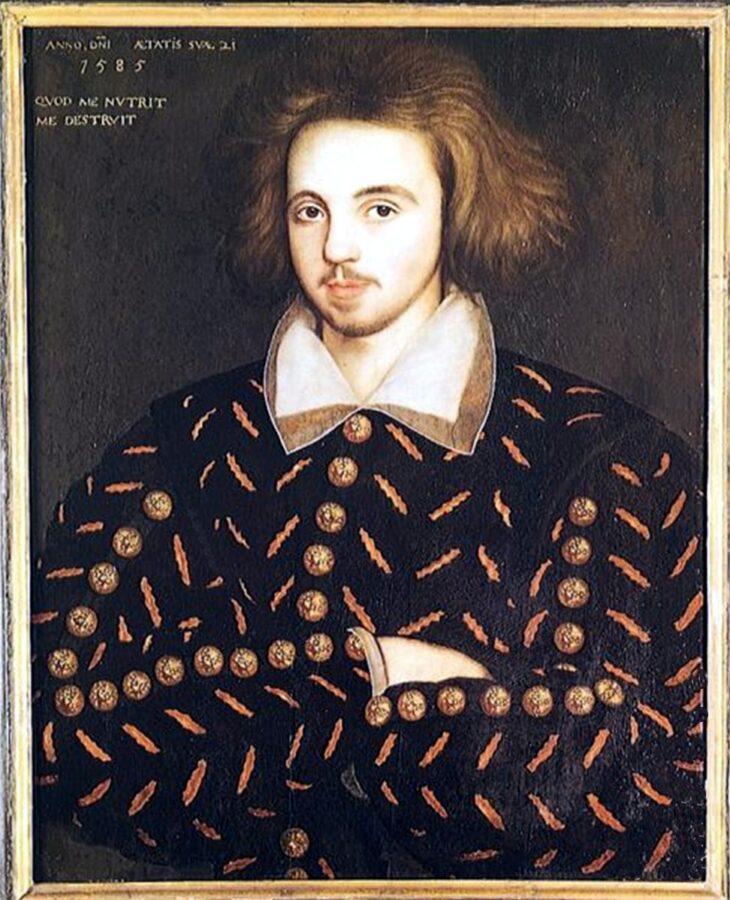
“The dangerous times and fatal genius of Shakespeare’s greatest rival” is the subtitle of Professor Stephen Greenblatt’s 2025 life of Christopher Marlowe, Dark Renaissance. In her review of Greenblatt’s book, Professor Emma Smith declares that “Marlowe’s life is chock-full of under-evidenced incidents that are charged with a thrilling imaginative energy. He emerges from fragmentary records already fully formed: a spy, a double agent, an atheist, a sodomite.” We will begin this LitSalon Short with a short survey of the highlights of Marlowe’s brief, exhilarating and controversial life (1564-1593), before considering how art reflects life in Marlowe’s dramatic and poetical works.
On stage, Marlowe’s characters – Tamburlaine, Barabas, Faustus – demonstrate boundless self-confidence as they over-reach human, moral and physical boundaries, attempting to subordinate the natural order and the cosmos itself to their individual will. The language they use is filled with electrifying energy, breath-taking sonorities and dazzling verbal imagery.
Drawing on the depth of his rich classical education (the aesthetics and metamorphoses of Ovid, extended and elaborate similes à la Homer, the passion and brutality of Senecan tragedy, and the power of the persuasive oratory of Cicero and Demosthenes), Marlowe’s literary works also abound in the fruit of the humanist learning of his time, not least Ortelius’ influential atlas, Theatrum Orbis Terrarum (1570), consulted to provide geographic precision and exotic, ravishing naming of places.
In the theatre, Marlowe pioneered what Ben Jonson called “Marlowe’s Mighty Line”: unrhymed iambic pentameter (blank verse). In launching an assault on his predecessors and their “jiggling veins of rhyming mother wits”, he provided the standard dramatic literary form that was to be adopted and developed by Shakespeare and other later playwrights.
During this LitSalon Short we will focus on the two parts of Marlowe’s first great masterpiece, Tamburlaine the Great, using these plays to illustrate his linguistic pyrotechnics and literary genius.
JOINING DETAILS:
- Single session ‘LitSalon Short’ led by Tim Swinglehurst
- Tuesday 18 August, 6.00 – 7.15 pm (UK time)
- Free of charge but please use the booking form below to reserve your place.