This is a repeating event- Event 1 / 45 August 2026 5:00 pm
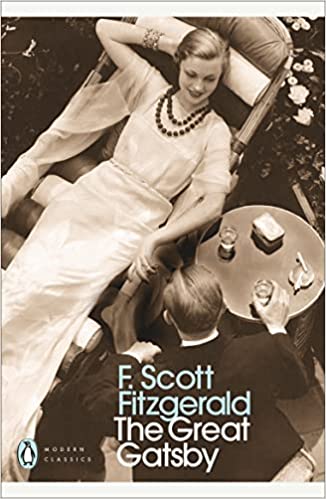
The Great Gatsby - F. Scott Fitzgerald
Event Details
“They were careless people, Tom and Daisy—they smashed up things and creatures and then retreated back into their money or their vast carelessness . . . and let other people clean up the mess they had made.”
“So we beat on, boats against the current, borne back ceaselessly into the past.”
When The Great Gatsby was first published in April 1925, it was a commercial and critical failure. Fitzgerald’s contemporaries — T.S. Eliot, Ernest Hemingway, Edith Wharton, Gertrude Stein — wrote to him in admiration, but the wider public was unmoved. The novel had sold only 25,000 copies by the time of Fitzgerald’s death fifteen years later, aged 44, his heart giving out after years of heavy drinking.
The novel’s resurrection came from an unlikely source. During the Second World War, the Council on Books in Wartime distributed over 150,000 Armed Services Editions to soldiers — and Gatsby found its audience in the trenches. Then, in 1945, the critic Lionel Trilling declared Jay Gatsby a symbol of the American Dream itself, an act of critical elevation that lifted the novel into the North American literary canon, where it has remained ever since, its status as a ‘classic’ further cemented by adoption into high school and college curricula in the 1950s and 60s.
What a difference 100 years can make. The Great Gatsby has now sold 30 million copies worldwide, spawned six feature films, and — in the last two years alone — inspired two major Broadway and West End musical productions. ‘The Jazz Age’, a term Fitzgerald himself coined, has passed permanently into the global imagination.
And yet this novel set in the aftermath of the First World War — that brief, feverish interval of new money, loose morals, and borrowed time — feels less like history and more like a mirror. Jay Gatsby is one of literature’s great early architects of the curated public image: a man who reinvented himself from scratch, surrounded that invention with spectacle, and bet everything on a single, doomed idea of who he needed to be. In our current era of personal branding, social media performance, and the relentless pressure to project a life rather than to live one, this predicament is instantly recognisable.
So too is the world Gatsby inhabits: the careless elites of East Egg, the strivers of West Egg, the vast exhausted majority watching from the ash heaps in between. Fitzgerald’s anatomy of class anxiety, performative wealth and the violence that hides behind good manners resonates with particular force at a moment of historic wealth transfer, rising populism and deepening questions about who the American Dream was ever really for.
Fitzgerald knew, a century before the term existed, that ‘hustle culture’ is a trap. Real corruption isn’t just wanting more, it’s the moment you decide that wanting justifies everything else.
Let us read.
JOINING DETAILS:
- Four-meeting study, live on Zoom, led by Toby Brothers & Nancy Goldstein
- Wednesdays, 5.00–7.00 pm (UK time), 29 July – 19 August 2026
- Recommended edition: The Great Gatsby by F. Scott Fitzgerald, Penguin Modern Classics, ISBN-13 : 978-0141182636
- £160.00 for four two-hour meetings
REDUCED COSTS: we are committed to making our studies as affordable as possible. We have a fund in place to support anyone who would like to register for a study but finds the cost difficult to afford. We can’t promise to help, but please email us at litsalon@gmail.com in confidence if you would like to request a reduction in the cost of a study.