What’s on?
Salon calendar & booking
Go to Booking Now! for a one-stop shop with links to studies available to book now.
Please find below a list of Salon studies already running (or completed earlier this month) and those coming soon. Click any listing for more information, including online booking details and cost where places are still available to book. Unless otherwise indicated, all studies are virtual and conducted online on Zoom (which is free to use for participants). You can also view our Study Calendar with dates of all sessions month-by-month.
We post Salon studies throughout the year, typically eight weeks before the start date. For updates on what’s coming up please subscribe to our free newsletter and check this site regularly. On our Archive page you can browse a list of past Salons and you are welcome to contact us to suggest new studies you would be interested to see or past studies you would like us to offer again.
Please see our Terms & Conditions here.
June 2026
Event Details
Event Details

“Every reader finds himself. The writer’s work is merely a kind of optical instrument that makes it possible for the reader to discern what, without this book, he would perhaps never have seen in himself.”
Marcel Proust
With this final volume of In Search of Lost Time we reach the end of the journey for the groups that have been studying Proust for the past two years, and I complete my eighth tour through this mountain of modernism. Each visit reveals new nuggets and gasping moments.
If you are interested in reading Proust from the beginning, please watch our website for the next Proust cycle that will commence early in 2027 and make sure you are signed up for our newsletter in which we announce new studies.
Here is how one Salonista describes the pleasure and work of reading Proust: ”This is a velvet jewel of a book that demands the attention of a lover full of enchantment and obsession, we need not get impatient as all good lovers perfect their art in taking their time.”
Reading Proust teaches the reader to observe how the world is experienced, to be aware that although humans are tempted to give greater weight to the perceptual universe, it is the entwining of memory, idealised experience (dreams) and relationships with what our senses perceive that moulds our consciousness.
JOINING DETAILS:
- Facilitated by Toby Brothers
- Mondays 1.00-3.00 pm (UK)
- Eleven meeting virtual study (on Zoom) from 9 March – 15 June 2026 (N.B. no meetings on 13 April, 4 May, 11 May and 8 June 2026)
- Recommended edition: Penguin Classics Finding Time Again (Patterson/Prendergast) ISBN: 9780141180366 (the Vintage Classics edition: Time Regained ISBN: 978009936271 5 is also acceptable)
- £330 for 11 meetings, includes background materials, literary criticism, opening notes and discussion notes.
Organizer
Time
Location
VIRTUAL - ON ZOOM
Future Event Times in this Repeating Event Series
Book this Salon
Places are no longer available for this event
Event Details
Event Details
“Every reader finds himself. The writer’s work is merely a kind of optical instrument that makes it possible for the reader to discern what, without this book, he would perhaps never have seen in himself.”
Marcel Proust
With this final volume of In Search of Lost Time we reach the end of the journey for the group of second-time readers that has been studying Proust for the past two years, and I complete my eighth tour through this mountain of modernism. Each visit reveals new nuggets and gasping moments.
If you are interested in reading Proust from the beginning, please watch our website for the next Proust cycle that will commence early in 2027 and make sure you are signed up for our newsletter in which we announce new studies.
Here is how one Salonista describes the pleasure and work of reading Proust: ”This is a velvet jewel of a book that demands the attention of a lover full of enchantment and obsession, we need not get impatient as all good lovers perfect their art in taking their time.”
Reading Proust teaches the reader to observe how the world is experienced, to be aware that although humans are tempted to give greater weight to the perceptual universe, it is the entwining of memory, idealised experience (dreams) and relationships with what our senses perceive that moulds our consciousness.
JOINING DETAILS:
- Facilitated by Toby Brothers
- Mondays 3.30-5.30 pm (UK)
- Eleven meeting virtual study (on Zoom) from 9 March – 15 June 2026 (N.B. no meetings on 13 April, 4 May, 11 May and 8 June 2026)
- Recommended edition: Penguin Classics Finding Time Again (Patterson/Prendergast) ISBN: 9780141180366 (the Vintage Classics edition: Time Regained ISBN: 978009936271 5 is also acceptable)
- £330 for 11 meetings, includes background materials, literary criticism, opening notes and discussion notes.
Organizer
Time
Location
VIRTUAL - ON ZOOM
Future Event Times in this Repeating Event Series
Book this Salon
Places are no longer available for this event
Event Details
Event Details
“Every reader finds himself. The writer’s work is merely a kind of optical instrument that makes it possible for the reader to discern what, without this book, he would perhaps never have seen in himself.”
Marcel Proust
With this final volume of In Search of Lost Time we reach the end of the journey for the groups that have been studying Proust for the past two years, and I complete my eighth tour through this mountain of modernism. Each visit reveals new nuggets and gasping moments.
If you are interested in reading Proust from the beginning, please watch our website for the next Proust cycle that will commence early in 2027 and make sure you are signed up for our newsletter in which we announce new studies.
Here is how one Salonista describes the pleasure and work of reading Proust: ”This is a velvet jewel of a book that demands the attention of a lover full of enchantment and obsession, we need not get impatient as all good lovers perfect their art in taking their time.”
Reading Proust teaches the reader to observe how the world is experienced, to be aware that although humans are tempted to give greater weight to the perceptual universe, it is the entwining of memory, idealised experience (dreams) and relationships with what our senses perceive that moulds our consciousness.
JOINING DETAILS:
- Facilitated by Toby Brothers & Ralph Kleinman
- Mondays 6.00-8.00 pm
- Eleven meeting virtual study (on Zoom) from 9 March – 15 June 2026 (N.B. no meetings on 13 April, 4 May, 11 May and 8 June 2026)
- Recommended edition: Penguin Classics Finding Time Again (Patterson/Prendergast) ISBN: 9780141180366 (the Vintage Classics edition: Time Regained ISBN: 978009936271 5 is also acceptable)
- £330 for 11 meetings, includes background materials, literary criticism, opening notes and discussion notes.
Organizer
Time
Location
VIRTUAL - ON ZOOM
Future Event Times in this Repeating Event Series
Book this Salon
Places are no longer available for this event
Event Details
Photo by Mark Casey on Unsplash
Event Details

“But what is more to the point is my belief that the habit of writing thus for my own eye only is good practice. It loosens the ligaments. Never mind the misses and the stumbles. Going at such a pace as I do I must make the most direct and instant shots at my object, and thus have to lay hands on words, choose them and shoot them with no more pause than is needed to put my pen in the ink.”
Virginia Woolf, A Writer’s Diary
An invitation to writers of all levels (beginners are as welcome as the more experienced) — to loosen the ligaments, put perfection aside, and write for the quiet joy of discovery; to share a space where words unfold boldly, imperfectly, and in response to curiosity.
Rooted in the ethos of the London Literary Salon — where close reading and conversation open pathways to deeper understanding — this writing series, facilitated by Alison Cable, extends the same spirit of inquiry into creative practice. An invitation to explore writing as a way of thinking, feeling, and knowing.
Each block of three months offers a gentle rhythm of practice: a facilitated Anchor Session followed later in the month by a companion Open Writing Session, where you can return to your work, deepen the ideas sparked in the workshop, and write alongside others in quiet company.
How it works
- Anchor Session (first Tuesday of each month, 5.00-7.00 pm, UK time):
A guided workshop exploring a theme, text, or prompt through discussion, short exercises and optional sharing. These sessions provide inspiration and direction for your writing practice. - Open Writing Session (third Tuesday of each month, 5:00–6:30 pm, UK time):
A lightly held, communal writing space in which you can develop your ideas, try new forms, or simply write in the company of others. Optional check-in and sharing at the end. - Block Pass: £105 for three months (includes three Anchor Sessions and three companion Open Writing Sessions). This block encourages continuity and engagement, with sessions scheduled monthly to help you build a routine.
- Single Sessions: please enquire.
Block 1: January – March 2026
- Anchor: 6 January | 3 February | 3 March
- Open: 20 January | 17 February | 17 March
Block 2: April – June 2026
- Anchor: 7 April | 5 May | 2 June
- Open: 28 April | 19 May | 23 June
Block 3: July – September 2026
- Anchor: 7 July | 4 August | 1 September
- Open: 21 July | 18 August | 15 September
Block 4: October – December 2026
- Open: 20 October | 17 November | 22 December
- Anchor: 6 October | 3 November | 1 December
Organizer
Time
Location
LIVE ON ZOOM
Future Event Times in this Repeating Event Series
Book this Salon
Places are no longer available for this event
Event Details
Event Details

“Tell me the tale of a man, Muse, who had so many roundabout ways
To wander, driven off course, after sacking Troy’s hallowed keep;
Many the peoples whose cities he saw and whose ways of thinking he learned,
Many the toils he suffered at sea, anguish in his heart
As he struggled to safeguard his life and the homecoming of his companions.”The opening lines of Daniel Mendelsohn’s translation of Homer’s Odyssey
“This may be the best translation of The Odyssey yet.”
Edith Hall, The Telegraph
Following their twelve-week study of The Iliad, facilitators Susanna Taggart and Caroline Hammond will tackle The Odyssey in the same format, covering two books per session, allowing time to look at the text from many angles: its historical context, the debates surrounding its authorship, its literary and psychological subtexts and its enduring influence on modern culture in the English-speaking world and beyond. We will combine a close reading of the text and a wider focus, including poems and art inspired by the epic, consideration of the psychology of war and return, and images of museum exhibits.
Published in 2025, the celebrated author, critic and classicist Daniel Mendelsohn’s acclaimed translation has brought The Odyssey to new life. Readers have praised this line-for-line translation for capturing the epic’s formal qualities – meter, enjambment, alliteration and assonance to produce a work full of the beauty and music of the original as well as its archaic grandeur.
“The plot of The Odyssey is not long in the telling. A man has been away from home for many years. Poseidon is always on the watch for him; he is all alone. As for the situation at home, his goods are being laid waste by the Suitors, who plot against his son. After a storm-tossed journey, he returns home, where he reveals himself, destroys his enemies, and is saved.”
Aristotle, Poetics, translated by Daniel Mendelsohn
Writers from Dante to James Joyce to Margaret Atwood have been inspired by the story of Odysseus and his quest to return home after ten years of war. In Homer’s telling, the world of Odysseus is both vast and intimate with the smallest details – from flowers growing outside Kalypso’s cave to the performance of everyday household tasks – rendered in vivid detail. It is a story that asks questions about what it means to be human, particularly when Odysseus has been stripped of the context that has previously defined him: he is a warrior whose war is long over, a leader who has lost all of his men, a father who has missed his son growing up and a husband lost to his wife. Join us to explore the complexity and difficulty of this central character and why the poem remains at the heart of our shared literary culture today.
JOINING DETAILS:
- Twelve two-hour meetings live on Zoom, led by Caroline Hammond and Susanna Taggart
- Tuesdays, 5.00 -7.00 pm (BST), 19 May – 4 August 2026
- Optional one-hour session for final reflections on Tuesday 11 August
- Recommended edition: The Odyssey: A New Translation by Daniel Mendelsohn, ISBN: 9780241733585. Please note, the paperback edition will be released on 23 April 2026.
- £420 for twelve meetings with two facilitators, to include opening notes and resources.
Time
Location
LIVE ON ZOOM
Future Event Times in this Repeating Event Series
Book this Salon
Places are no longer available for this event
Event Details
“You should approach Joyce’s Ulysses as the illiterate Baptist preacher approaches the Old Testament: with faith.”
Event Details
“You should approach Joyce’s Ulysses as the illiterate Baptist preacher approaches the Old Testament: with faith.”
William Faulkner
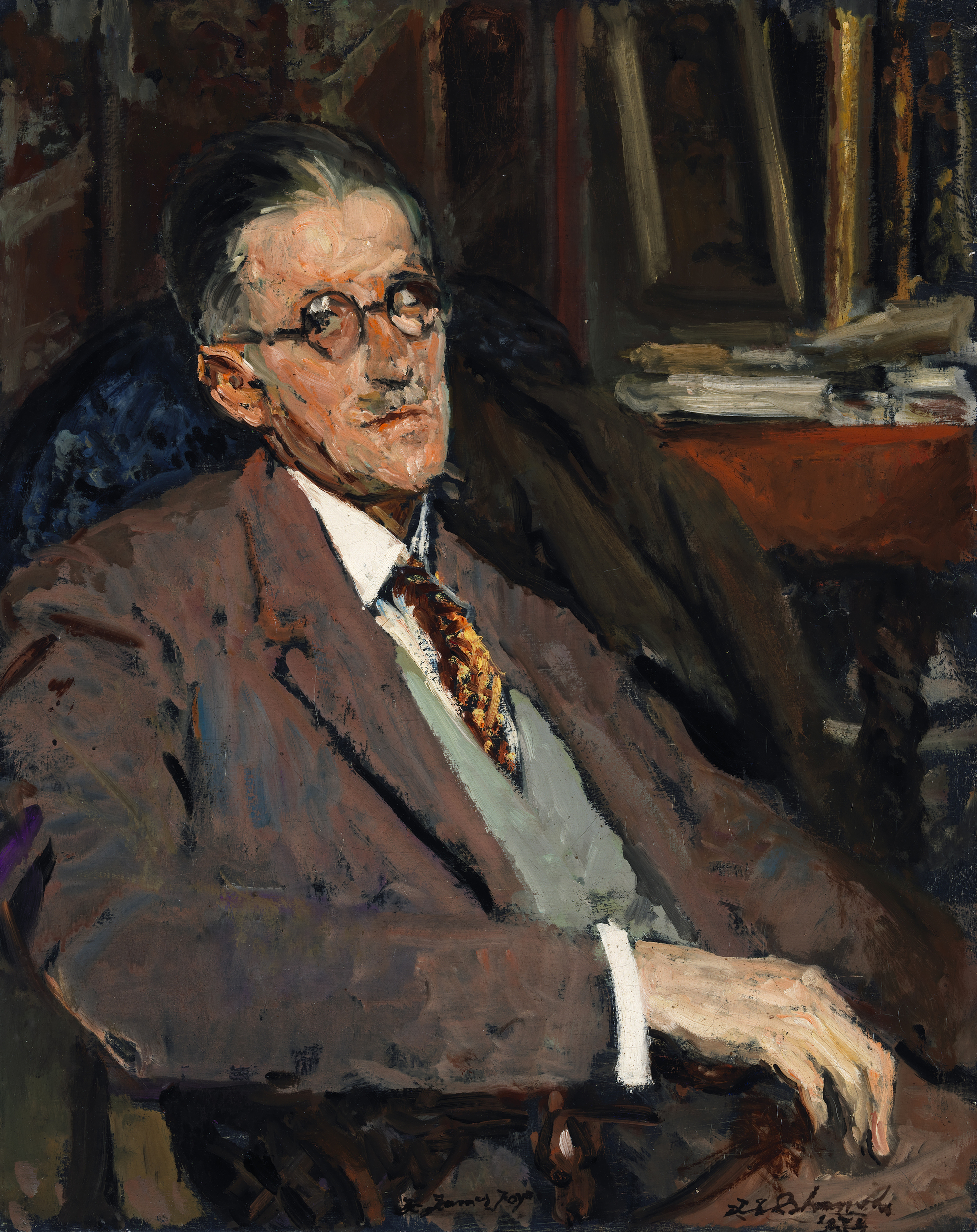
“. . . Joyce’s contribution to a new way of writing particularly as it affects narrative theory, the role of the reader, and how stories are told from inside the consciousness of the individual. So both the external world we associate with history and the internal world that rightly belongs to the private world of consciousness are redrawn by Joyce in a manner that is both original and at times dependent on sources outside the novel.”
David Pierce in Joyce’s Portrait: A New Reading
First published on 2 February 1922 – James Joyce’s 40th birthday – UIysses was immediately controversial, described by one Irish critic as “The most infamously obscene book in ancient or modern literature”.
We offer an opportunity to read one of the greatest novels of all time in the company of others. This study is suitable both for people who have not yet entered the pages of Ulysses and those who have already read it at least once. Our work with this book will widen your perspective and deepen your experience of the power of language.
There is a strong argument for studying this huge and intimidating text – book list chart-topper of 100 greatest books of all time, critics’ darling, most lauded/least read, the book that many literary academics dedicate their lives to studying – but you will only know for yourself by diving in. I believe the best way to study it is with a group of hungry, curious readers who all contribute to evoking meaning, through their questions as well as their insights.

The good news: reading Ulysses is fun. And I don’t mean in a frustrating, overly-analytical see-how-much-you-know-way. The language is amazing – even when I don’t understand it. Perhaps, especially when I don’t understand it, because meaning sneaks in through more than my critical faculty. Meaning slides in through sound, through the lushness of the language, through the filmy and substantial images, and suddenly I find myself transported from a walk on a beach to a contemplation of the origins of man – thanks, James Joyce.
Any time spent studying Joyce leaves one a better reader – a broader thinker – even if all the references, repetitions, epiphanies and allusions are not immediately understood.
Here are comments from two Ulysses participants:
“I am thoroughly enjoying this journey. I feel wide open, exposed and receptive to new ways of thinking. What could be better than that? I enjoy the links with the classics and their current counterparts such as the agony of Sisyphus and the trials of thoughtful, surely sad, Martin Cunningham. And then Bloom with his many pockets reminded me in an amusing way of the Artful Dodger.
“Joining the Ulysses salon was one of the best things I have ever done. This was a book I had wanted to read for years but never got past the first section. I had no idea what the salon would be like and was very apprehensive about joining up. But Toby so skilfully guided us through it, her knowledge of the text seemingly inexhaustible, that with her warmth and generosity and sensitivity she got everyone involved and the satisfaction of participating in the salon and in getting an understanding of this marvellous work was immense.“
JOINING DETAILS:
- We are offering this study from 5.30 -7.30 pm (UK time), comprising 21 meetings starting on Tuesday 13 January and finishing on Tuesday 16 June 2026, with four possible Sunday afternoon meetings (4.30-6.30pm on 8 February, 15 March and 14 June) and NO meetings on 5 and 12 May.
- The total cost for the 21 meeting study, with all notes and resources materials, is £550
- Please purchase these editions in preparation for our study:
- Ulysses, by James Joyce, Annotated Students’ Edition, Penguin Modern Classics 2011, ISBN: 9780141197418. There are many editions of Ulysses — I find this edition is most coherent and the notes and introduction by Declan Kieberd very helpful; as we will constantly be referencing particular passages, having the same edition will be extremely useful.
- The New Bloomsday Book: A Guide Through Ulysses, by Harry Blamires, ISBN-10: 0415138582
REDUCED COSTS: we are committed to making our studies as affordable as possible. We have a fund in place to support anyone who would like to register for a study but finds the cost difficult to afford. We can’t promise to help, but please email us at litsalon@gmail.com in confidence if you would like to request a reduction in the cost of a study.
Organizer
Time
Location
VIRTUAL - ON ZOOM
Future Event Times in this Repeating Event Series
Book this Salon
Places are no longer available for this event
Event Details
Event Details

“I see at intervals the glance of a curious sort of bird through the close-set bars of a cage: a vivid, restless, resolute captive is there; were it but free, it would soar cloud-high.”
Jane Eyre is a profoundly important novel. It is a stalwart of feminist literature, a challenge to social hierarchy and arguably instigated the ‘inward turn’ in narrative fiction, where psychological factors became just as significant as events in the active world. From the beginning of the narrative, Jane is an interior being, brimming with anger and an acute sense of injustice. As she navigates her neglectful family, abusive school and unnerving first job as a governess, she is challenged to remain true to her convictions and follow through with what she believes.
In our discussions we’ll cover our personal responses to Jane’s plight. What does Brontë mean by presenting these challenges to the reader, and what do we make of them? Furthermore, we might think of how characters such as Adele, Bertha Mason and Mrs Fairfax elaborate on these challenges. Issues we may dwell on include: social injustice, the lives of children, postcolonial perspectives, feminist perspectives, psychology, and notions of space and landscape.
JOINING DETAILS:
- Eight-meeting study, live on Zoom, led by Karina Jakubowicz
- Tuesdays, 19, 26 May & 2, 9, 16, 23, 30 June & 7 July 2026, 6.00-8.00 pm (UK)
- Recommended edition: Jane Eyre by Charlotte Brontë, Penguin Classics, ISBN: 9780141441146
- £320.00 for eight two-hour meetings
Organizer
Time
Location
LIVE ON ZOOM
Future Event Times in this Repeating Event Series
Book this Salon
Places are no longer available for this event
Event Details
Portrait of T.S. Eliot by Ellie Koczela, Creative Commons Four Quartets (1943) was written
Event Details

Four Quartets (1943) was written at the end of T.S. Eliot’s poetic career and is considered by some to be his greatest work. The Four Quartets reflects the four seasons and the four elements, with each section having its own attendant landscape. These include the gardens of Burnt Norton, the open fields of East Coker, the small group of rocks that make up The Dry Salvages, and the village of Little Gidding. All of these spaces reflect facets of England in the 1940s while also serving as Eliot’s internal environment, a place where he wrestles with the themes of death, nature and time. The backdrop of the Second World War adds an eerie pertinence to Eliot’s musings as he contemplates his own demise, yet the poem is rarely despairing. ‘What we call the beginning is often the end,’ he states, ‘And to make an end is to make a beginning./ The end is where we start from.’
Contrary to Eliot’s suggestion, we will start at the beginning and work our way to the end (perhaps to look back on the beginning with new eyes). The study will take place over five weeks.
JOINING DETAILS:
- Five meeting study led by Karina Jakubowicz live on Zoom
- Wednesdays, 13 May – 10 June, 6.00-8.00 pm (UK)
- £200 for five two-hour meetings
REDUCED COSTS: we are committed to making our studies as affordable as possible. We have a fund in place to support anyone who would like to register for a study but finds the cost difficult to afford. We can’t promise to help, but please email us at litsalon@gmail.com in confidence if you would like to request a reduction in the cost of a study.
Organizer
Time
Location
VIRTUAL - ON ZOOM
Future Event Times in this Repeating Event Series
Book this Salon
Places are no longer available for this event
Event Details
Event Details
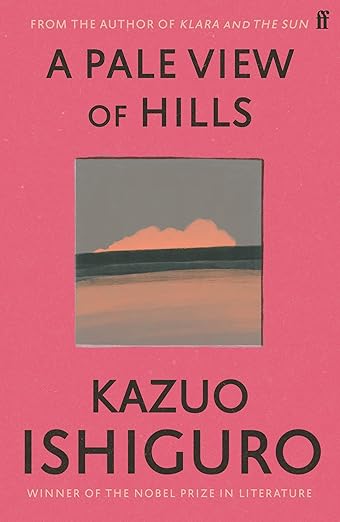
‘It is possible that my memory of these events will have grown hazy with time, that things did not happen in quite the way they come back to me today. But I remember with some distinctness that eerie spell which seemed to bind the two of us as we stood together in the coming darkness looking towards that shape further down the bank.’
Kazuo Ishiguro’s first novel is a haunting study of memory and loss set in post-war Nagasaki and 1980s England.
The author was born in Nagasaki and his mother was a survivor of the nuclear bomb. But he left Japan aged five and grew up in England, not even visiting the country of his birth until well into adult life. In his Nobel Prize speech, Ishiguro said that with hindsight, writing this novel was an attempt to get down in writing his ‘personal Japan’, a ‘Japan of the mind’, before losing it forever.
In Ishiguro’s post-war Nagasaki, still under US occupation, people feel a mix of hope for the future (Japan’s so-called ‘new dawn’), unease and dread concerning the lingering effects of the bomb, and bitter resentment towards the previous generation that led them to war. For young wife Etsuko, these feelings are concentrated into her concerns about motherhood and the future of her unborn child. But how does this play out in her memory decades later, following that child’s suicide?
Written in his mid-twenties, this astonishingly mature and accomplished first novel includes themes which would resonate throughout Ishiguro’s later work, such as the conflict between generations, regret in later life for earlier choices, self-deception and the distortions of memory.
Like Ishiguro’s other novels, A Pale View of Hills deals with how we overcome loss, how we make sense of the past through recollection, and how we construct our present selves through the way we remember our past.
Following the recent film version, which takes a very Japanese perspective and necessarily simplifies some elements, now is the perfect time to revisit Ishiguro’s original text and its enduring mysteries and ambiguities. Every return to this novel reveals further rich layers of meaning, emotion and interpretation, which we will uncover through a series of slow and careful readings.
JOINING DETAILS:
- Four meeting study, live on Zoom, led by Lewis Ward
- 20 May – 10 June 2026, 6.00 – 8.00 pm (UK time)
- Recommended edition: A Pale View of Hills by Kazuo Ishiguro, Faber & Faber, ISBN: 978-0571258253
- £140.00 for four two-hour meetings, to include background notes and resources
- Lewis Ward will also lead a free-of-charge LitSalon Short Kazuo Ishiguro and Japan on Wednesday 13 May (6.00 – 8.00 pm BST).
REDUCED COSTS: we are committed to making our studies as affordable as possible. We have a fund in place to support anyone who would like to register for a study but finds the cost difficult to afford. We can’t promise to help, but please email us at litsalon@gmail.com in confidence if you would like to request a reduction in the cost of a study.
Organizer
Time
Location
LIVE ON ZOOM
Future Event Times in this Repeating Event Series
Book this Salon
Places are no longer available for this event
Event Details
Event Details

As the first epic Anglo-Saxon poem, Beowulf holds a unique place in the history of English literature. Set in the warrior societies of dark age Denmark and Sweden, it tells of the hero Beowulf and his three victorious fights with the monstrous creature Grendel, with Grendel’s ferocious, vengeful mother, and with a venomous, fire-breathing, treasure-hoarding dragon.
Every translation of a work of literature is a new interpretation of the original and there have been many versions down the centuries. In this LitSalon Short, Tim Swinglehurst will discuss some of the more recent traditional translations of Beowulf and compare them to the acclaimed 2021 ‘feminist’ version translated by celebrated author and editor Maria Dahvana Headley, which focuses on themes of toxic masculinity, power dynamics and warrior-bonding while, in the words of Professor Carolyne Larrington, allowing “space for the poem’s women to stretch and breathe”.
Tim will also explain why he has chosen this translation, described by The New Yorker as “a Beowulf for our moment” as the focus for a four-week study of Beowulf he will lead from 2-23 July 2026 (full details can be found here).
JOINING DETAILS:
- A one and a quarter hour LitSalon Short led by Tim Swinglehurst live on Zoom
- LitSalon Shorts are offered free of charge but places must be pre-booked using the form below.
Organizer
Time
Location
LIVE ON ZOOM
Book this Salon
Places are no longer available for this event
Event Details
Portrait of John Keats by William Hilton, Public domain, via
Event Details

John Keats wrote all six of the odes that anchor his legacy in 1819 — five of them in a two-month period, during April and May, and the sixth that September. In October of the same year he turned 24. Seventeen months later, at the age of 25, Keats died in Rome of tuberculosis, leaving behind one of the most concentrated periods of lyric achievement in English literary history.
In addition to covering all of Keats’ odes, in this six-week study we will also examine their extraordinary influence on the lyric tradition by examining other works that wrestle with Keats’ canonical meditations on art, beauty, truth and transience.
Week 1: Ode to Psyche — We begin the study by discussing the first ode in Keats’ sequence — his first mature work — contrasted with two poems by Wallace Stevens, one of Keats’ best known modern admirers and critics. Like Keats, the earlier Stevens poem builds a mental shrine to an internalized goddess of imagination; the later poem is the last one Stevens ever wrote, while he knew he was dying (published posthumously).
- Wallace Stevens: To the One of Fictive Music (1923) & Of Mere Being (1955)
Week 2: Ode to a Nightingale — written in early May 1819, reportedly composed in a single morning under a plum tree in the garden of Wentworth Place (now Keats House, Hampstead).
- Emily Dickinson: I Heard a Fly buzz — when I died (1862)
- Rita Dove: Reverie in Open Air (2003)
Week 3: Ode on a Grecian Urn — written May 1819, closely contemporary with the Nightingale ode. The two are often read as companion pieces exploring related problems of art, permanence, and mortality from different angles.
- Wallace Stevens: The Poems of Our Climate (1942)
- Eavan Boland: The Dolls Museum in Dublin (1992)
Week 4: Ode on Melancholy — written May 1819.
- William Butler Yeats: Sailing to Byzantium (1927)
- Sylvia Plath: Tulips (1961)
Week 5: Ode on Indolence — also May 1819, though it was the last of the Spring odes to be published (posthumously in 1848).
- Wallace Stevens: The Snow Man (1921)
- Anne Carson: The Keats Headaches (2019) a handout will be supplied
Week 6: To Autumn — written on 19 September 1819, in Winchester, after Keats took an evening walk along the water meadows of the River Itchen.
Mary Oliver: The Summer Day (1990)
John Berryman: Dream Song 14 (1964)
JOINING DETAILS:
- Six meeting study, live on Zoom, led by Dr Nancy Goldstein
- Thursdays, 6.30-8.30 pm (UK time), 4 June – 9 July
- £240 for six meetings
REDUCED COSTS: We are committed to making our studies as affordable as possible. We can’t promise to help but please email us if you would like to be considered for a reduced-fee place (your details will be treated as confidential).
Organizer
Time
Location
LIVE ON ZOOM
Future Event Times in this Repeating Event Series
Book this Salon
Places are no longer available for this event
Event Details
Event Details

Henry James called Balzac “a final authority on human nature” and said that he “took in more of human life that anyone since Shakespeare.” James referred to Balzac as “really the father of us all.”
If you’ve read James, you will find this extremely surprising because neither Balzac’s life nor his fiction bear any resemblance to James’s own.
Honoré de Balzac (1799 – 1850) lived his chaotic life to the fullest. Life was one long adventure. Many mistresses, and perhaps some boyfriends too (his sympathetic picture of gay male characters is referred to more than once in Proust’s oeuvre), illegitimate children, crazy business schemes, debtors’ prison, law school (he dropped out), parties, travel – he never stopped. He was his own greatest creation.
In his spare time, Balzac managed to complete 91 novels, all of which are part of his lifetime literary project, La Comédie humaine (The Human Comedy). If you hear echoes of Dante, don’t be surprised, Balzac always compared himself to the literary greats. Charles Robb, one of Balzac’s modern biographers, wrote of La Comédie humaine: “Balzac’s epic of modern life is the last attempt by any writer to comprehend and educate a whole world in its diversity, to offer a complete, unified, scientific picture of society and human experience.”
I know that in prior material for the Literary Salon I referred to Flaubert as the inventor of literary realism. I’m not stepping back from that, but the birth of literary realism wasn’t an immaculate conception: Balzac was there at its beginning.
Our work with Balzac’s La Comédie humaine continues with Lost Illusions (Les Illusions Perdues). Why? Mostly because the three-novel series (Le Père Goriot, Les Illusions Perdues, and Les Splendeurs et misères des courtisanes) form a unified work that covers all of Balzac’s preoccupations. Each work, brilliant in its own right, is amplified in proximity with the others, uplifted into the highest stratosphere of French literature.
And, as a bonus, we’ll spend more time with Eugène de Rastignac and Vautrin from Père Goriot.
JOINING DETAILS:
- 10-meeting study led by Ralph Kleinman
- Thursdays, 7.00-9.00 pm (UK), 16 April – 25 June 2026
- Recommended edition: Lost Illusions, translated by Herbert Hunt, Penguin Classics, ISBN: 9780140442519
- £350 for 10 two-hour meetings
Organizer
Time
Location
LIVE ON ZOOM
Future Event Times in this Repeating Event Series
Book this Salon
Places are no longer available for this event
Event Details
Oedipus and the Sphinx of Thebes, photograph by Carole Raddato, Frankfurt, Germany
Event Details

Greek tragedy has a timeless quality. As Virginia Woolf writes in her essay On Not Knowing Greek, ‘the stable, the permanent, the original human being is to be found there. . . . In the Electra or the Antigone we are impressed . . . by heroism itself, by fidelity itself.’
Revenge, betrayal, lust, murder— but also courage, compassion, honour: Sophocles shows the heights and depths of human emotion. We are moved today by the tension between reason and emotion, fate and free will, law and individual conscience, just as people were in classical Athens.
This LitSalon study will go deep into the world of Sophocles as we read Oedipus Rex, Antigone, Philoctetes, and Oedipus at Colonus. And we will explore the philosophy of tragedy with Aristotle’s Poetics and A. C. Bradley’s essay Hegel’s Theory of Tragedy.
JOINING DETAILS:
- Seven meeting live online study led by Sean Forester
- Sundays, 17 May – 28 June 2026, 4.00-6.00 pm (UK time)
- 17 May – Oedipus Rex
- 24 May – Oedipus, Aristotle’s Poetics
- 31 May – Antigone
- 7 June. – Antigone, Hegel on Tragedy
- 14 June – Philoctetes
- 21 June – Oedipus at Colonus
- 28 June – Oedipus at Colonus, Tragic Painting and Sculpture
- £245 for seven meeting study on Zoom
REDUCED COSTS: we are committed to making our studies as affordable as possible. We have a fund in place to support anyone who would like to register for a study but finds the cost difficult to afford. We can’t promise to help, but please email us at litsalon@gmail.com in confidence if you would like to request a reduction in the cost of a study.
Organizer
Time
Location
LIVE ON ZOOM
Book this Salon
All places are booked
Event Details
Portrait of Michel de Montaigne, Public domain, via Wikimedia Commons
Event Details

“What do I know?”
This question lies at the heart of Montaigne’s Essays, a work that, from its first publication in 1580, has challenged our relationship with knowledge. For one thing, instead of pontificating or lecturing on anything, Montaigne’s Essays propose that we “try out” (“essayer”) everything.
At almost 1,000 pages, the Essays are filled with a variety of personal experiences mixed with passages that are sometimes serious and profound, sometimes funny and very personal, some are very moving, and some utterly contradict things that he has said before! It is no surprise that Montaigne has influenced a host of thinkers, readers and writers as varied as Shakespeare, Pascal, Thoreau, Virginia Woolf and Proust (to name just a few).
In this study we invite readers to join in a conversation spanning the centuries by exploring together two of Montaigne’s most famous essays: On Cannibals and On Experience.
A little taste of his writing that might get us close to him, or maybe, as Pascal would say, close to ourselves:
“It is not in Montaigne but in myself that I find everything that I see there”
JOINING DETAILS:
- Three meeting study, live on Zoom, led by Vivien Kogut and Emilia Steuerman
- Tuesdays 5:30-7:30pm (UK time), 16, 23 and 30 June 2026
- £120.00 for three two-hour meetings
Time
Location
LIVE ON ZOOM
Future Event Times in this Repeating Event Series
Book this Salon
All places are booked
Event Details
Event Details

In May 2026 The Arden Shakespeare, widely regarded as setting the ‘gold standard’ for scholarly editions of Shakespeare’s oeuvre, will publish the first volumes of its new Fourth Series. These new editions will offer fresh insights into Shakespeare’s extraordinary output to new generations of readers, students and performers, as well as to those who are already familiar with his works.
We are delighted that Dr José Perez Diez, Associate Professor of Early Modern Drama in the School of English at the University of Leeds, who is editing the new edition of King John, has accepted our invitation to deliver a lecture on the art and craft of editing Shakespeare’s works and how this can enhance our own appreciation and understanding of his words and ideas.
Following the lecture there will be a panel discussion, chaired by London Literary Salon facilitator Tim Swinglehurst, with colleagues Julie Sutherland and Jane Wymark, chaired by Tim Swinglehurst with opportunities for questions and comments from participants to gain greater insight into the process, challenges and rewards of attentive editing and reading.
ABOUT OUR SPEAKER:

Dr José A. Pérez Díez is Associate Professor of Early Modern Drama in the School of English at the University of Leeds. He currently serves as the Joint Chair of the British Shakespeare Association, and is a General Editor of The Revels Plays and the Associate Editor of the Oxford Complete Works of John Marston. He is editing the King John volume for the new Arden Shakespeare series.
JOINING DETAILS:
- Wednesday 17 June 2026, 6.00-8.00 pm (UK time), live on Zoom
- Lecture by Dr José Pérez Díez lasting approximately 55 minutes, followed by panel discussion chaired by Tim Swinglehurst, with Jane Wymark and Dr Julie Sutherland and questions and comments from participants.
- £25.00 for two-hour live online event
Organizer
Time
Location
LIVE ON ZOOM
Book this Salon
Event Details
By Bridleway to Edale by Dave Dunford, Creative Commons The London Literary Salon invites
Event Details

The London Literary Salon invites you to join a five-day study based in Edale, in the Peak District National Park in June 2026. There we will explore Charlotte Brontë’s Jane Eyre through landscape, literature and creative practice. This long weekend will be a living conversation between text, location and lived experience — an invitation to read, write and walk in immersive engagement with Brontë’s novel and the moors that inspired it.
How might we read Jane Eyre today — as a story of selfhood and rebellion, but also as a text shaped by gender, empire, class and desire? This immersive study combines literary discussion, reflective writing, and walking on the moorland paths that inspired Brontë’s novel. A short train trip to Hathersage, the village closely linked to the novel, will offer further insight into the places that inspired Brontë’s writing. Participants will also have the opportunity to walk the 8 km Jane Eyre Hathersage Trail, tracing the village, architecture and landscape that shaped Brontë’s imagination.
Toby Brothers will lead our literary discussions, guiding us through the rich text with reflections that include psychological, feminist, postcolonial and queer readings of Jane Eyre. Alison Cable will co-facilitate and offer walking and creative writing sessions, encouraging reflection, response and imaginative engagement with both text and landscape. Together, we will explore the familiar and the overlooked: Jane’s struggles for autonomy, the silences within the text, and the ways literature continues to resonate with questions of freedom, identity and justice in our own lives, here and now.
According to the poet, essayist and feminist Adrienne Rich:
‘The concern of the tale is not with social mores, the social mores may occur among the risks and challenges encountered by the protagonist. Neither is it an anatomy of the psyche, the faded chemistry of cosmic forces. It takes its place between the two: between the realm of the given, that which is changeable by human activity, and the realm of the fated, that which lies outside human control: between realism and poetry.
‘The world of the tale is above all a “vale of soul making”, and when a novelist finds herself writing a tale it is likely to be because she is moved by that vibration of experience which underlies the social and political, though it constantly feeds into both of these. In her essay on Jane Eyre, critic Q.D. Leavis perceives the novel’s theme as “. . . an exploration of how a woman comes to maturity in the world of the writer’s youth”. I would suggest that a novel about how a man “comes to maturity in the world of the writers youth” would not be dismissed as lacking in range or in Woolf’s words, “a sense of human problems”. I would suggest further that Charlotte Bronte is writing not a bildungsroman but the life story of a woman who is incapable of saying “I am Heathcliff” because she feels so unalterably herself. Jane Eyre, motherless and economically powerless, undergoes certain traditional female temptations, and finds that each temptation presents itself along with an alternative –the image of a nurturing or principled or spirited woman on whom she can model herself, or to whom she can look for support.‘
Adrienne Rich, Jane Eyre: The Temptations of a Motherless Woman (published in the Norton Critical Edition of Jane Eyre)
While Virginia Woolf wrote that the Brontes:
‘. . . seized those aspects of the earth which were most akin to what they themselves felt or imputed to their characters, and so their storms, their moors, their lovely spaces of summer weather are not ornaments applied to decorate a dull page or display the writer’s powers of observation – they carry on the emotion and light up the meaning of the book.’
Virginia Woolf, The Common Reader (1916)
We will be based in Edale, with accommodation confirmed at The Gathering, a combination of glamping ‘lodges’ and barns, with options for shared or single rooms. Walking across the hills and moors will offer space for thought and inspiration, but all activities are optional: indoors, we will read, write and talk together, fostering immersive engagement with text and the landscape. To round out the evenings, participants may choose to join the local pub quiz or a folk music night, taking advantage of the lively sense of community and place.
SAMPLE SESSIONS INCLUDE:
- Morning literary discussion with Toby Brothers: close reading of key passages, exploring Jane’s journey, moral choices and the novel’s social and political contexts.
- Afternoon creative writing and walking with Alison Cable: guided reflective walks on the moors, using the landscape as inspiration for short writing exercises and prompts.
- Short train trip to Hathersage: experiencing the village that inspired Brontë, with an optional walk to Stanage Edge, passing ‘Vale Hall,’ ‘Thornfield’ and ‘Moor House’, and the added bonus of Robin Hood’s cave and the gravesite of Little John.
- Evening reflection sessions: sharing insights, discussing emergent themes, experimenting with creative responses, and optional participation in pub quiz, bonfire, and folk night.
JOINING DETAILS:
- Five-day study in Edale, Derbyshire led by Toby Brothers and Alison Cable
- 18-22 June 2026
- £550 for the study and background notes, plus £105 for three days half board (breakfast and lunch on Friday, Saturday and Sunday), total cost £655
- Additional costs: participants are responsible for arranging and paying for their own travel, glamping accommodation at The Gathering, additional meals and insurance. Group bookings for accommodation and optional guided walks must be arranged in advance.
- We strongly recommend reading or re-reading Jane Eyre in preparation for the weekend so the language, ideas and vision of the text are fresh. Recommended edition: Norton Critical Fourth Edition (published in 2016, this is preferable to the third edition) ISBN: 978-0-393-64050-2.
- An initial non-refundable deposit of £50 secures your place, with the balance of £605 (including breakfasts and lunches) payable by 1 May 2026.
- Any refunds will be at the discretion of the London Literary Salon, dependent on our ability to fill the place, and will be subject to an administration charge.
Time
Location
Edale, Derbyshire
Book this Salon
BOOKING DEPOSIT OF £50 TO BE PAID ON REGISTRATION. THE BALANCE OF £605 IS PAYABLE BY 1 MAY 2026.
All places are booked
Event Details
William Blake, Public domain, via Wikimedia Commons
Event Details
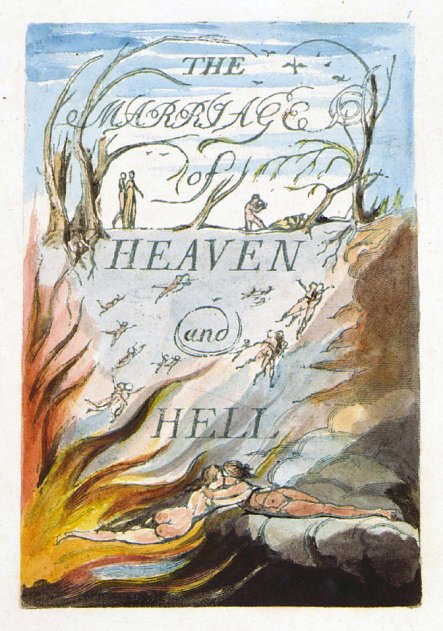
William Blake expressed his radical vision through illuminated books that combine poetry and art. We’ll study selections from some of his powerful early poems: Songs of Innocence and Experience, The Auguries of Innocence and The Marriage of Heaven and Hell. While Blake’s poetry stands on its own and requires no background knowledge, encountering him is especially interesting after reading Dante or Milton. So, this study would be a fine next chapter for those who have previously studied Paradise Lost or The Divine Comedy with the LitSalon. You can view some of Blake’s art and poetry here.
JOINING DETAILS:
- Five meeting study led by Sean Forester
- Mondays, 6.00 – 8.00 pm (UK time), 22, 29 June and 6,13, 20 July
- Please purchase facsimile editions of Songs of Innocence and Experience and The Marriage of Heaven and Hell with Blake’s illuminated manuscripts in full colour. The texts are also available free online at the Blake Archive.
- £200 for five two-hour meetings
Organizer
Time
Location
LIVE ON ZOOM
Future Event Times in this Repeating Event Series
Book this Salon
Event Details
This is the twelfth in a series of single session studies on Shakespeare’s Sonnets. Participants are welcome to join as few or many sessions
Event Details
This is the twelfth in a series of single session studies on Shakespeare’s Sonnets. Participants are welcome to join as few or many sessions as they please.
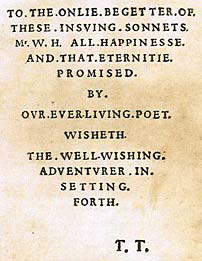
For centuries, critics have debated the identity of Shakespeare’s poetic rival, depicted in the sonnets as a celebrated writer competing for the equally mysterious Fair Youth’s patronage and affection. Leading candidates include Christopher Marlowe, George Chapman and Edmund Spenser, though he may represent a composite of rivals. He vanishes from the sonnets as abruptly as he appears. In this twelfth standalone session, we’ll examine two of the nine “rival poet” sonnets alongside an earlier sonnet addressed directly to the beloved.
The sonnets have always inspired, fascinated and disturbed readers. Are these lyric expressions of tortured love – among other themes – the key to understanding the mysterious life of Shakespeare, or are they not autobiographical at all?
Through close analysis and hands-on interpretive work, we will examine Shakespeare’s kaleidoscopic exploration of his speaker’s romantic and tortured feelings and experiences.
JOINING DETAILS:
- Single two-hour meeting led by Dr Julie Sutherland on Zoom
- Wednesday 24 June 2026, 5.00 – 7.00 pm (BST)
- Session #12 – Sonnets 79, 86 and 87
- £30.00 for two-hour study
We are offering these self-contained, individual studies of Shakespeare’s sonnets in a workshop style setting. Over time we will cover a broad selection of the 154 sonnets that comprise Shakespeare’s celebrated sequence. Participants are invited to join as few or many sessions as they please.
Before the session, Julie Sutherland will send links to online versions or attach specific copies for discussion. It is highly recommended that you print these off before joining this hands-on session. If you have a printed edition, please also have it ready so we can consider variations between texts. Have a notebook and pencil on hand as well!
REDUCED COSTS: we are committed to making our studies as affordable as possible. We have a fund in place to support anyone who would like to register for a study but finds the cost difficult to afford. We can’t promise to help, but please email us at litsalon@gmail.com in confidence if you would like to request a reduction in the cost of a study.
Organizer
Time
Location
VIRTUAL - ON ZOOM
Book this Salon
Event Details
Original illustration by John Tenniel, Public domain, via Wikimedia Commons
Event Details

Since its first appearance in print in 1865, Alice’s Adventures in Wonderland has enchanted generations of children with the tale of a little girl who follows a white rabbit down a rabbit hole, to discover a bizarre and fantastical world occupied by equally outlandish and unsettling characters such as the Mad Hatter, the Cheshire Cat and the formidable Queen of Hearts.
In this LitSalon Short we will consider why the book (and its sequel Alice Through the Looking Glass) have such enduring appeal to both adults and children. How many interpretations are possible and what were the intentions of its author Lewis Carroll, aka Charles Dodgson, the Oxford mathematics don? What do we bring to the book as readers, often remembering it from our childhood experience of the text and illustrations portraying a strange and sometimes surreal alternative reality?
For anyone wanting to dig deeper, Tim will be leading a four meeting study of Alice’s Adventures in Wonderland starting in August.
JOINING DETAILS:
- Single meeting LitSalon Short, live on Zoom, led by Tim Swinglehurst
- Thursday 25 June, 6.00-7.15 pm (UK time)
- Free of charge (but please book your place using the form below)
Organizer
Time
Location
LIVE ON ZOOM
Book this Salon
July 2026
Event Details
Event Details
The first major poem in English literature, Beowulf was composed between the eighth and eleventh centuries in a language which few English speakers understand today. Set in the warrior societies of dark age Denmark and Sweden, it tells of the hero Beowulf and his three victorious fights with the monstrous creature Grendel, with Grendel’s ferocious, vengeful mother, and with a venomous, fire-breathing, treasure-hoarding dragon. It is also, in the words of celebrated author and editor Maria Dahvana Headley, a recent translator of the poem, “a dazzling, furious, funny, vicious, desperate, hungry, beautiful, mutinous, maudlin, supernatural, rapturous shout”.
We will be reading Beowulf in Headley’s acclaimed, radical, ‘feminist’ version – “brash and belligerent, lunatic and invigorating” as The New Yorker describes it. It’s “a Beowulf for our moment”, focusing on themes of toxic masculinity, power dynamics and warrior-bonding while, in the words of Professor Carolyne Larrington, allowing “space for the poem’s women to stretch and breathe”.
Headley declares that the lines in her translation are “structured for speaking, and for speaking in contemporary rhythms” and she maintains the alliterative and rhythmic drive of the original. This is a translation which demands to be read aloud and to be heard attentively, and this study will provide an opportunity so to honour both poem and translation.
Every translation is a new interpretation of the original, Headley’s more brashly and explicitly than most. As we read, we will also keep one eye on more traditional translations (and from time to time scrutinise the original Old English) to try to discern other themes and ideas haunting the world of Beowulf.
JOINING DETAILS:
- Four-meeting study led by Tim Swinglehurst live on Zoom
- Thursday 2, 9, 16 & 23 July 2026, 6.00-8.00 pm (UK time)
- We will read the translation by Maria Dahvana Headley, published by Scribe UK, ISBN: 978-1911617822
- £140.00 for four meetings.
Organizer
Time
Location
LIVE ON ZOOM
Future Event Times in this Repeating Event Series
Book this Salon
Event Details
Photo by Mark Casey on Unsplash
Event Details
“But what is more to the point is my belief that the habit of writing thus for my own eye only is good practice. It loosens the ligaments. Never mind the misses and the stumbles. Going at such a pace as I do I must make the most direct and instant shots at my object, and thus have to lay hands on words, choose them and shoot them with no more pause than is needed to put my pen in the ink.”
Virginia Woolf, A Writer’s Diary
An invitation to writers of all levels (beginners are as welcome as the more experienced) — to loosen the ligaments, put perfection aside, and write for the quiet joy of discovery; to share a space where words unfold boldly, imperfectly, and in response to curiosity.
Rooted in the ethos of the London Literary Salon — where close reading and conversation open pathways to deeper understanding — this writing series, facilitated by Alison Cable, extends the same spirit of inquiry into creative practice. An invitation to explore writing as a way of thinking, feeling, and knowing.
Each block of three months offers a gentle rhythm of practice: a facilitated Anchor Session followed later in the month by a companion Open Writing Session, where you can return to your work, deepen the ideas sparked in the workshop, and write alongside others in quiet company.
How it works
- Anchor Session (first Tuesday of each month, 5.00-7.00 pm, UK time):
A guided workshop exploring a theme, text, or prompt through discussion, short exercises and optional sharing. These sessions provide inspiration and direction for your writing practice. - Open Writing Session (third Tuesday of each month, 5:00–6:30 pm, UK time):
A lightly held, communal writing space in which you can develop your ideas, try new forms, or simply write in the company of others. Optional check-in and sharing at the end. - Block Pass: £105 for three months (includes three Anchor Sessions and three companion Open Writing Sessions). This block encourages continuity and engagement, with sessions scheduled monthly to help you build a routine.
- Single Sessions: please enquire.
Block 1: January – March 2026
- Anchor: 6 January | 3 February | 3 March
- Open: 20 January | 17 February | 17 March
Block 2: April – June 2026
- Anchor: 7 April | 5 May | 2 June
- Open: 28 April | 19 May | 23 June
Block 3: July – September 2026
- Anchor: 7 July | 4 August | 1 September
- Open: 21 July | 18 August | 15 September
Block 4: October – December 2026
- Open: 20 October | 17 November | 22 December
- Anchor: 6 October | 3 November | 1 December
Organizer
Time
Location
LIVE ON ZOOM
Future Event Times in this Repeating Event Series
Book this Salon
Event Details
Event Details
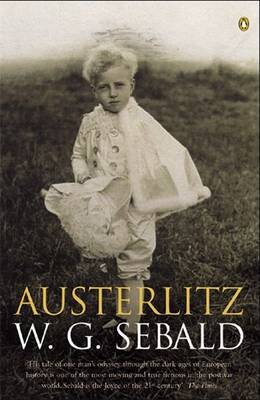
‘I think of how little we can hold in mind, how everything is constantly lapsing into oblivion with every extinguished life, how the world is, as it were, draining itself, in that the history of countless places and objects which themselves have no power of memory is never heard, never described or passed on.’
Austerlitz
‘His art is a form of justice’
Rachel Cusk
The last book by the great German writer W. G. Sebald, Austerlitz (2001), tells the story of one individual’s twentieth century trauma through the repression and return of his memory and belated investigations into his origins.
‘Jacques Austerlitz’ is a Kindertransport survivor who spent most of his adult life avoiding any knowledge of the Third Reich, including his own involvement and his family’s fate. When memory returns, the effect is shattering and seismic. At once a study of a traumatised consciousness at the limit, and a new way of apprehending (and beginning to understand) the degenerate history of the twentieth century.
This may seem like more than enough to be going on with, but as a literary work Austerlitz is so much more. With no chapters, few paragraphs, and dotted throughout with ambiguous photographs, this doesn’t look much like an ordinary novel. And indeed it partakes of many other genres, including memoir, travelogue, philosophy, history . . . Long passages are devoted to architectural history, birds, the nature of time, early aviation and religion in Wales, topics which may or may not relate to the central themes of the book.
And as in all Sebald’s prose narratives, there is the mysterious narrator, someone who both is and is not the author, who listens with respect and empathy to Austerlitz’s story, meeting him by chance over several decades, and who adds his own documentations and investigations to the story. The result is a book that is beautifully written, revelatory and ultimately almost unbearably moving.
Over the eight weeks of this study we will begin to answer the following questions, among others:
- What does this novel tell us about the nature of memory itself?
- What are the ethical and moral quandaries faced by both writer and reader of this book?
- How do Sebald’s unique style and technique – at once archaic and postmodern, German and English – enhance our appreciation and understanding of the narrative?
- What connects the author-narrator to his traumatized subject?
- What role do the enigmatic, caption-less photographs and images play in the text?
- What is the background to the writing of this book, and its inspiration (much has been discovered since the author’s death)?
JOINING DETAILS:
- Eight-meeting study, live on Zoom, led by Lewis Ward
- Wednesday 8 July – 26 August, 7.00-9.00 pm
- £280.00 for eight two-hour meetings
- Recommended edition: Austerlitz by W.G. Sebald, Penguin, ISBN: 9780241951804
Organizer
Time
Location
LIVE ON ZOOM
Future Event Times in this Repeating Event Series
Book this Salon
Event Details
Satan Calling Up His
Event Details

Step into the vast cosmos of John Milton’s Paradise Lost in this immersive eight-week study. More than a poem, Milton’s epic is a world unto itself, one with vaulted heavens, smouldering hells and a fragile Eden. It presents a realm where every choice tips the balance of creation. This study invites curious minds to lose themselves in the epic’s grandeur and wrestle with the questions it refuses to let go: what does it mean to rebel? To obey? To be free? To fall?
Over eight two-and-a-half-hour sessions, we will traverse all twelve books of Paradise Lost, tracing Milton’s visions of angels in revolt, serpentine deceits, and humankind on the brink of catastrophe. Each week, close reading of key passages will spark lively conversation about the poem’s grand themes: freedom and fate, temptation and grace, the allure of evil, and the possibility of redemption. Along the way, we shall uncover the thunderous music and daring invention that defines Milton’s verse.
This study is as much about experience as analysis. Reading this great work aloud will enable us to feel the powerful rhythm, sharpen our thinking in the heat of dialogue, and discover together how a 17th-century poet still speaks to us with urgent clarity. Participants will not just read Paradise Lost. They will inhabit it, wrestle with it, and carry its fire forward.
Whether you come for epic storytelling, moral philosophy, or the sheer intoxication of language, this study promises a journey that is as challenging as it is exhilarating. Experience or rediscover Milton’s masterpiece and join us as we explore what it means to “awake, arise or be for ever fall’n.”
JOINING DETAILS:
- Eight-week study, live on Zoom, led by Dr Julie Sutherland
- Eight two-and-a-half-hour meetings, Tuesdays, 5.00-7.30 pm (UK time)
- 14 July – 1 September 2026
- £320 for eight meetings and background notes and resources
- We will use the Penguin Classics edition: Paradise Lost by John Milton, edited by John Leonard (ISBN-10: 9780140424393)
Organizer
Time
Location
LIVE ON ZOOM
Future Event Times in this Repeating Event Series
Book this Salon
All places are booked
Event Details
Event Details
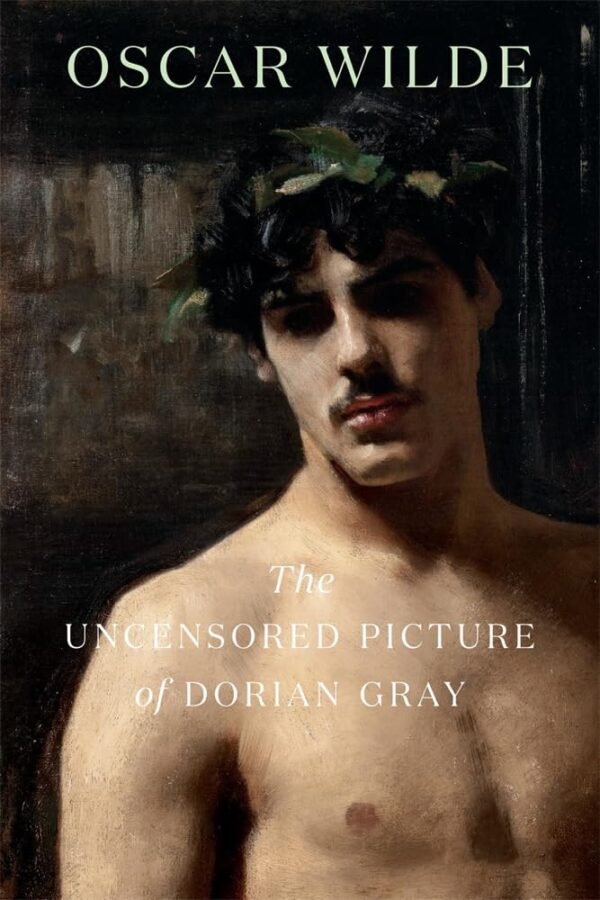
“. . . Unclean . . . spawned from the leprous literature of the French decadents — a poisonous book . . . ”
“Dull and nasty . . . stupid and vulgar . . . immoral. It may be suggested that Wilde derives pleasure from treating a subject merely because it is disgusting.”
“The poor public, hearing from an authority so high as your own, that this is a wicked book that should be coerced and suppressed by a Tory Government, will, no doubt, rush to it and read it. But, alas, they will find that it is a story with a moral. And the moral is this: All excess, as well as all renunciation, brings its own punishment. ”
Oscar Wilde, from his response to the St. James Gazette review, 25 June 1890
Joseph Marshall Stoddart, Oscar Wilde’s editor in the Philadelphia offices of Lippincott’s Magazine, was neither a bumpkin nor a prude: in 1882 he arranged for Wilde to visit Walt Whitman in Camden, New Jersey, during his American visit. But, alarmed by material he feared readers would find “offensive”, and unbeknownst to its author until after publication, Stoddart went through Wilde’s original manuscript, pencil in hand, crossing out some 500 words to render it “acceptable to the most fastidious taste.”
In short, the novel that Wilde’s irate fin de siècle reviewers deemed filth was already a bowdlerised version of The Picture of Dorian Gray.
The contemporary reader, fresh from watching the latest episode of RuPaul’s Drag Race, may struggle to understand the fury that The Picture of Dorian Gray unleashed in the 1890s. Or the stench it carried for decades after, having starred as Exhibit A in Wilde’s 1895 trials for “gross indecency”.
One hundred and thirty-six years on, The Picture of Dorian Gray speaks to our moment with uncanny precision.
Dorian Gray’s portrait — polished, static, forever young while its subject rots — anticipates the curated profile picture, the Zoom filter, the gap between the life performed online and the life actually lived. In an era of Botox and doom scrolling, instant gratification and weekly scandal, Wilde’s central question feels less like Victorian Gothic and more like Monday morning: what are we willing to sacrifice — integrity, authenticity, other people — to keep the image intact?
Wilde knew, long before Instagram did, that the real corruption isn’t the sins you commit; it’s the lengths you’ll go to make sure nobody sees them.
This study will use, as its basic text, The Uncensored Picture of Dorian Gray, published by the Harvard University Press (2012).
JOINING DETAILS:
- Four-meeting study, live on Zoom, led by Dr Nancy Goldstein
- Tuesdays, 8.00-10.00 (UK time), 14 July – 4 August
- HIGHLY recommended edition: The Uncensored Picture of Dorian Gray: A Reader’s Edition ISBN: 9780674066311
- £160.00 for four two-hour meetings
Organizer
Time
Location
LIVE ON ZOOM
Book this Salon
Event Details
Measure for Measure in Tales from Shakespeare, Elizabeth Shippen Green Elliott, Public domain, via Wikimedia Commons
Event Details

Please note that although this study is fully booked, we are currently keeping a waiting list and may be able to offer a second study if there is sufficient demand. Please email us if you would like to be included on the waiting list.
Join Julie Sutherland to explore the moral complexity, political intrigue and dark humour of William Shakespeare’s Measure for Measure in this eight-week full-text study. Often called a ‘problem play’, it resists easy categorisation: not a traditional comedy or tragedy, it confronts audiences with the messy realities of justice, sexual morality, corruption and the abuse of power.
In Measure for Measure, Duke Vincentio temporarily relinquishes power to the strict and seemingly righteous Angelo, who enforces Vienna’s laws with alarming severity. As the city grapples with corruption and sexual coercion, the characters—most notably the virtuous Isabella—navigate dilemmas of conscience, mercy and authority. Shakespeare exposes the tension between law and morality, highlighting the dangers of judging others when those in power are themselves deeply flawed.
Throughout the play, Shakespeare blends moments of comedy with unsettling moral questions, creating a world that is both vividly real and painfully ironic. Biblical themes of judgment and mercy echo throughout, challenging audiences to consider the balance between justice and forgiveness, while the looming, imperfect marriages at the play’s conclusion underscore the uncertainty of human happiness.
Over the course of eight meetings, we will read the entire play aloud, examining its rich language and provocative themes to gain a deep understanding of Shakespeare’s artistry. At the same time we will revel in the ways Measure for Measure reflects both the Elizabethan world and issues that remain startlingly modern.
JOINING DETAILS:
- Eight-meeting study live on Zoom led by Julie Sutherland
- Wednesdays, 5.00-7.00 pm BST, 15 July – 2 September 2026
- Recommended edition: Measure for Measure, The New Oxford Shakespeare, ISBN 13: 978-0192865861
- £280 for eight two-hour meetings
Organizer
Time
Location
LIVE ON ZOOM
Book this Salon
Please note that although this study is fully booked we are currently keeping a waiting list and may be able to offer a second study if there is sufficient demand. Please email litsalon@gmail.com if you would like to join the waiting list.
All places are booked
Event Details
Event Details

“He had a word, too. Love, he called it. But I had been used to words for a long time. I knew that that word was like the others: just a shape to fill a lack; that when the right time came, you wouldn’t need a word for that anymore than for pride or fear.”
Published in 1930, As I Lay Dying uses thirteen narrators to explore the many voices found in a Southern family and community. Addie Bundren, the wife and mother to a poor white farm family, is on her deathbed. As her last wish, she requests that her husband bury her among her family in the town of Jefferson. And so, upon her death, her family – for the most part begrudgingly – follows through with her wish. We hear from everyone involved in the journey, including Addie from the grave—a testament to Faulkner’s creation of an environment so believable that such outrageousness is allowed. The humour is dark. You might not expect to laugh at the image of a dead women’s corpse falling from a casket into a river, but you will.
Faulkner uses multiple narratives, each with his or her own interests and biases, to create a puzzle that readers could piece together from the ‘true’ circumstances of the story. The conclusion presents a key to understanding the background to the central event in a way that traditional linear narratives simply cannot accomplish. With that said, in As I Lay Dying all of the narrators are believable, even Addie who is dead when we hear from her.
The most brilliant aspect of this novel is how Faulkner carefully weaves fragments and pieces from the many narrative voices to create a rich tapestry of often conflicting and competing perspectives.
For more information about our study series Faulkner & His Children, please read our blog post here.
JOINING DETAILS:
- This, our first Faulkner & His Children study, will be a Salon Intensive taking place over three consecutive days, led by John Allemand and Toby Brothers.
- Three meetings on Zoom: Friday 17, Saturday 18 July & Sunday 19 July 2026, 5.00-7.30 pm (UK time).
- Recommended edition: As I Lay Dying by William Faulkner, Norton Critical Edition (Second Edition, August 2022), ISBN:9780393614534.
- £210 for three-day study.
Time
Location
LIVE ON ZOOM
Future Event Times in this Repeating Event Series
Book this Salon
All places are booked
Event Details
JOIN US FOR THIS UNIQUE LIVE PERFORMANCE – USE EARLYBIRD DISCOUNT CODE LLS15 WHEN CHECKING OUT YOUR
Event Details
JOIN US FOR THIS UNIQUE LIVE PERFORMANCE – USE EARLYBIRD DISCOUNT CODE LLS15 WHEN CHECKING OUT YOUR BOOKING!

To coincide with the cinema release of Christopher Nolan’s film of The Odyssey, we have joined with London-based Theatro Technis to bring key passages from Homer’s magnificent epic to life.
Salon founder Toby Brothers (who, over the last 25 years has shared The Odyssey with readers aged from 9 to 90) and actor and facilitator of many Salon studies Jane Wymark will present live readings of some of Homer’s most brilliant and compelling verses to tell the tale of the Greek warrior’s ten-year journey home to Ithaca, his perilous encounters with the Cyclops, the Sirens and Circe, and ultimate reunion with his wife and son.
After a short interval, audience members will be invited to join a Q&A session exploring why this extraordinary story of adventure and romance, written nearly three thousand years ago, remains relevant today.
HOW TO BOOK:
- The Odyssey Live! at Theatro Technis, Camden, London NW1, Sunday 19 July 2026, 3.00-5.00 pm
- Tickets are available from the theatre box office £20.00 (£15.00 concessions)
- Earlybird tickets can be purchased for £15.00 until 30 June, use code LLS15 when booking (add discount code at final stage of checkout).
Time
Event Details
Event Details
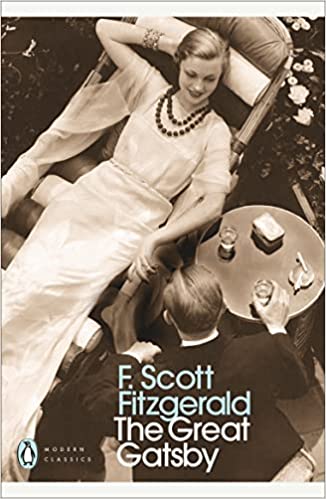
“They were careless people, Tom and Daisy—they smashed up things and creatures and then retreated back into their money or their vast carelessness . . . and let other people clean up the mess they had made.”
“So we beat on, boats against the current, borne back ceaselessly into the past.”
When The Great Gatsby was first published in April 1925, it was a commercial and critical failure. Fitzgerald’s contemporaries — T.S. Eliot, Ernest Hemingway, Edith Wharton, Gertrude Stein — wrote to him in admiration, but the wider public was unmoved. The novel had sold only 25,000 copies by the time of Fitzgerald’s death fifteen years later, aged 44, his heart giving out after years of heavy drinking.
The novel’s resurrection came from an unlikely source. During the Second World War, the Council on Books in Wartime distributed over 150,000 Armed Services Editions to soldiers — and Gatsby found its audience in the trenches. Then, in 1945, the critic Lionel Trilling declared Jay Gatsby a symbol of the American Dream itself, an act of critical elevation that lifted the novel into the North American literary canon, where it has remained ever since, its status as a ‘classic’ further cemented by adoption into high school and college curricula in the 1950s and 60s.
What a difference 100 years can make. The Great Gatsby has now sold 30 million copies worldwide, spawned six feature films, and — in the last two years alone — inspired two major Broadway and West End musical productions. ‘The Jazz Age’, a term Fitzgerald himself coined, has passed permanently into the global imagination.
And yet this novel set in the aftermath of the First World War — that brief, feverish interval of new money, loose morals, and borrowed time — feels less like history and more like a mirror. Jay Gatsby is one of literature’s great early architects of the curated public image: a man who reinvented himself from scratch, surrounded that invention with spectacle, and bet everything on a single, doomed idea of who he needed to be. In our current era of personal branding, social media performance, and the relentless pressure to project a life rather than to live one, this predicament is instantly recognisable.
So too is the world Gatsby inhabits: the careless elites of East Egg, the strivers of West Egg, the vast exhausted majority watching from the ash heaps in between. Fitzgerald’s anatomy of class anxiety, performative wealth and the violence that hides behind good manners resonates with particular force at a moment of historic wealth transfer, rising populism and deepening questions about who the American Dream was ever really for.
Fitzgerald knew, a century before the term existed, that ‘hustle culture’ is a trap. Real corruption isn’t just wanting more, it’s the moment you decide that wanting justifies everything else.
Let us read.
JOINING DETAILS:
- Four-meeting study, live on Zoom, led by Toby Brothers & Nancy Goldstein
- Wednesdays, 5.00–7.00 pm (UK time), 29 July – 19 August 2026
- Recommended edition: The Great Gatsby by F. Scott Fitzerald, Penguin Modern Classics, ISBN-13 : 978-0141182636
- £160.00 for four two-hour meetings
REDUCED COSTS: we are committed to making our studies as affordable as possible. We have a fund in place to support anyone who would like to register for a study but finds the cost difficult to afford. We can’t promise to help, but please email us at litsalon@gmail.com in confidence if you would like to request a reduction in the cost of a study.
Time
Location
LIVE ON ZOOM
Future Event Times in this Repeating Event Series
Book this Salon
Event Details
Photo by John Allemand
Event Details
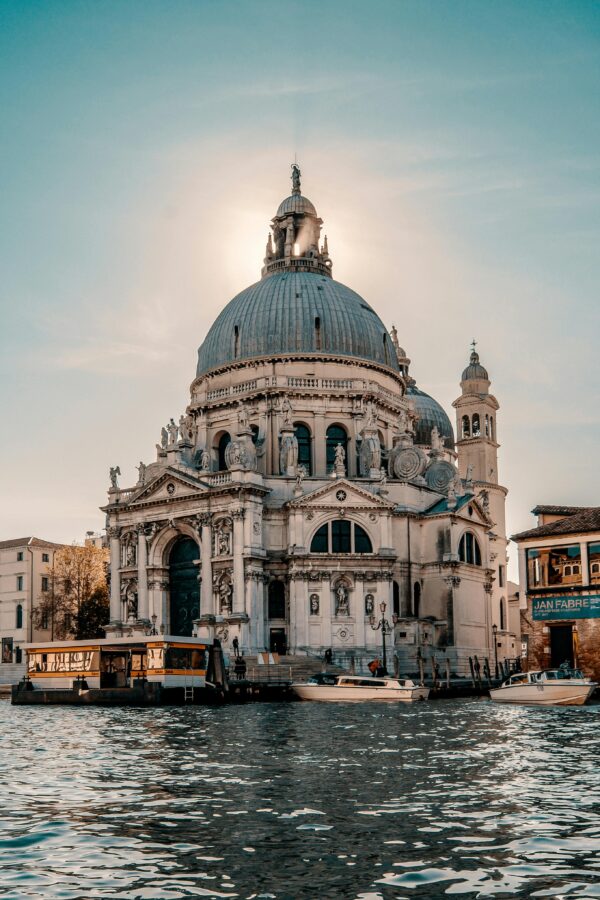
“The observations and encounters of a devotee of solitude and silence are at once less distinct and more penetrating than those of the sociable man; his thoughts are weightier, stranger, and never without a tinge of sadness. Images and perceptions which might otherwise be easily dispelled by a glance, a laugh, an exchange of comments, concern him unduly, they sink into mute depths, take on significance, become experiences, adventures, emotions. Solitude begets originality, bold and disconcerting beauty, poetry. But solitude can also beget perversity, disparity, the absurd and the forbidden.”
Thomas Mann, Death in Venice
Among the masterpieces of early twentieth-century European literature, Thomas Mann’s 1912 novella Death in Venice stands as one of the most subtle and unsettling meditations on beauty, art and moral disintegration.
At first glance the story appears straightforward: ageing writer Gustav von Aschenbach travels to Venice seeking rest and renewal, only to become increasingly obsessed with the beauty of a young Polish boy, Tadzio. Yet, beneath this deceptively simple narrative lies an extraordinarily complex structure of mythological allusion, stylistic irony and philosophical reflection. Mann uses this sophisticated architecture to explore interwoven questions about the relationship between beauty and corruption, the conflict between artistic discipline and erotic fascination, and the danger inherent in the aesthetic idealization of youth.
This three-part study will approach Death in Venice through careful reading, examining the intricate ways Mann constructs meaning through language, narrative perspective and symbolic patterning. The narrator’s voice remains elegant, composed and almost ceremonially dignified, even as the increasingly troubling reality of Aschenbach’s behaviours becomes apparent and his psychological state deteriorates. This contrast generates a quiet but devastating irony which is essential to any reading of the text.
Central to Mann’s method is what later critics, borrowing a phrase associated with modernist literary practice, have called the ‘mythic method’. Rather than recounting myth directly, Mann embeds classical mythological structures within the psychological narrative, transforming his tale into a mythic drama of descent.
Classical motifs (Mann’s ‘new classicism’—ironic, reflective, self-conscious) function as mythic signals guiding the reader beneath the surface of the narrative as the central character becomes a figure moving within an invisible mythological framework, his personal crisis repeating patterns drawn from antiquity. As the language of classicism slowly gives way to a dreamlike atmosphere of decay, Tadzio becomes less a character than a symbolic embodiment of ideal beauty itself.
Following our three-session literary study, we will turn to Luchino Visconti’s acclaimed 1971 film adaptation and examine the dynamic relationship between literature and film. Celebrated as one of the most visually striking adaptations of a modernist text, Visconti transforms Mann’s dense verbal narrative into a rich visual meditation on art, desire and mortality. In two additional sessions we will consider how Visconti reinterprets Mann’s work through cinema: how emphasis is shifted from literary interiority to visual atmosphere, how music—particularly the use of Mahler—reshapes the emotional structure of the story, and how the film’s imagery elaborates Mann’s themes of beauty, decadence and decline.
What happens when a story built on interior reflection and ironic narration is translated into images, gestures and sound? Which elements of Mann’s mythic structure survive the transition to cinema, and which are transformed or displaced? Where the novella relies on language and narrative irony, the film must communicate through composition, colour and rhythm.
Together, the elements of this study will allow us to observe a remarkable dialogue between two artistic forms.
JOINING DETAILS:
- Five two-and-a-half hour meetings, live on Zoom, led by John Allemand
- Fridays, 6.00-8.30 pm (UK time), 31 July, 7, 14, 21 & 28 August 2026
- Recommended edition: Thomas Mann, Death in Venice, translated by Michael Henry Heim, introduction by Michael Cunningham, Harper Collins Ecco, ISBN: 978-0060576172
- Luchino Visconti, Death in Venice (1971), is available on most streaming services (including Amazon Prime, Apple TV, You Tube TV, Hulu) and we also recommend Criterion Collection’s digitally remastered print of 2019. We will show selected film clips during the study sessions, but participants are asked to watch the film closely in advance.
- £225.00 for twelve-and-a-half hour study over five meetings, to include background notes and resources.
Organizer
Time
Location
LIVE ON ZOOM
Future Event Times in this Repeating Event Series
Book this Salon
August 2026
Event Details
Detail from Greek vase, User:Ilaria.manfrini, CC BY-SA 3.0, via Wikimedia
Event Details
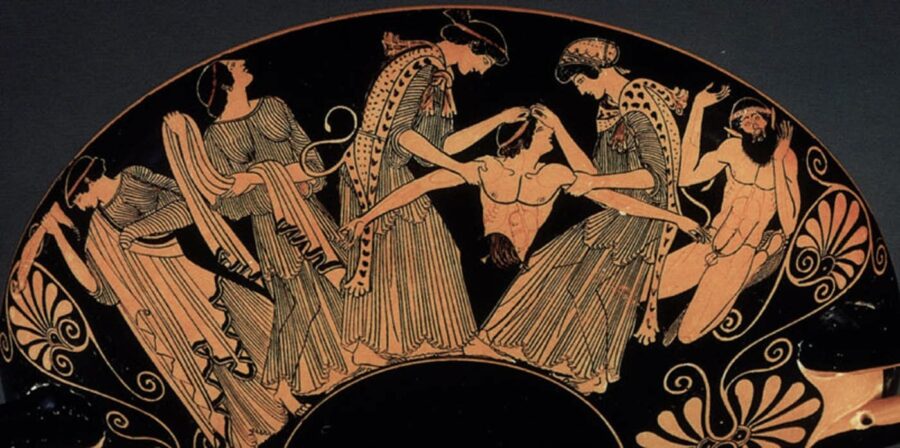
At this difficult time in the world, it can be salutary to confront the darker aspects of human nature through literature and experience the catharsis of Greek tragedy. In this spirit we are offering a study on two of Euripides’ greatest plays: Trojan Women and The Bacchae. Trojan Women shows the horrors of war, while The Bacchae confronts us with the Dionysian madness highlighted by Nietzsche in The Birth of Tragedy.
It is fascinating to see how tragic drama developed from Aeschylus and Sophocles through the pivotal figure of Euripides, who set the stage for later masters of the genre such as Shakespeare, Ibsen and Chekhov. The LitSalon is exploring this through a series of studies. Please join us for this encounter with Euripides.
JOINING DETAILS:
- Four meeting study, led by Sean Forester live on Zoom
- Sundays, 4.30 – 6.30 pm (UK time), 26 July & 2, 9, 16 August
- Recommended edition: you may use any translation you prefer providing it has line numbers clearly marked. One good option is: The Greek Plays: Sixteen Plays by Aeschylus, Sophocles, and Euripides (Modern Library Classics), Mary Lefkowitz (Editor), James Romm (Editor).
- £160 for four two-hour meetings
Organizer
Time
Location
LIVE ON ZOOM
Future Event Times in this Repeating Event Series
Book this Salon
Event Details
Photo by John Allemand
Event Details
“The observations and encounters of a devotee of solitude and silence are at once less distinct and more penetrating than those of the sociable man; his thoughts are weightier, stranger, and never without a tinge of sadness. Images and perceptions which might otherwise be easily dispelled by a glance, a laugh, an exchange of comments, concern him unduly, they sink into mute depths, take on significance, become experiences, adventures, emotions. Solitude begets originality, bold and disconcerting beauty, poetry. But solitude can also beget perversity, disparity, the absurd and the forbidden.”
Thomas Mann, Death in Venice
Among the masterpieces of early twentieth-century European literature, Thomas Mann’s 1912 novella Death in Venice stands as one of the most subtle and unsettling meditations on beauty, art and moral disintegration.
At first glance the story appears straightforward: ageing writer Gustav von Aschenbach travels to Venice seeking rest and renewal, only to become increasingly obsessed with the beauty of a young Polish boy, Tadzio. Yet, beneath this deceptively simple narrative lies an extraordinarily complex structure of mythological allusion, stylistic irony and philosophical reflection. Mann uses this sophisticated architecture to explore interwoven questions about the relationship between beauty and corruption, the conflict between artistic discipline and erotic fascination, and the danger inherent in the aesthetic idealization of youth.
This three-part study will approach Death in Venice through careful reading, examining the intricate ways Mann constructs meaning through language, narrative perspective and symbolic patterning. The narrator’s voice remains elegant, composed and almost ceremonially dignified, even as the increasingly troubling reality of Aschenbach’s behaviours becomes apparent and his psychological state deteriorates. This contrast generates a quiet but devastating irony which is essential to any reading of the text.
Central to Mann’s method is what later critics, borrowing a phrase associated with modernist literary practice, have called the ‘mythic method’. Rather than recounting myth directly, Mann embeds classical mythological structures within the psychological narrative, transforming his tale into a mythic drama of descent.
Classical motifs (Mann’s ‘new classicism’—ironic, reflective, self-conscious) function as mythic signals guiding the reader beneath the surface of the narrative as the central character becomes a figure moving within an invisible mythological framework, his personal crisis repeating patterns drawn from antiquity. As the language of classicism slowly gives way to a dreamlike atmosphere of decay, Tadzio becomes less a character than a symbolic embodiment of ideal beauty itself.
Following our three-session literary study, we will turn to Luchino Visconti’s acclaimed 1971 film adaptation and examine the dynamic relationship between literature and film. Celebrated as one of the most visually striking adaptations of a modernist text, Visconti transforms Mann’s dense verbal narrative into a rich visual meditation on art, desire and mortality. In two additional sessions we will consider how Visconti reinterprets Mann’s work through cinema: how emphasis is shifted from literary interiority to visual atmosphere, how music—particularly the use of Mahler—reshapes the emotional structure of the story, and how the film’s imagery elaborates Mann’s themes of beauty, decadence and decline.
What happens when a story built on interior reflection and ironic narration is translated into images, gestures and sound? Which elements of Mann’s mythic structure survive the transition to cinema, and which are transformed or displaced? Where the novella relies on language and narrative irony, the film must communicate through composition, colour and rhythm.
Together, the elements of this study will allow us to observe a remarkable dialogue between two artistic forms.
JOINING DETAILS:
- Five two-and-a-half hour meetings, live on Zoom, led by John Allemand
- Mondays, 6.00-8.30 pm (UK time), 3, 10, 17, 24 & 31 August 2026
- Recommended edition: Thomas Mann, Death in Venice, translated by Michael Henry Heim, introduction by Michael Cunningham, Harper Collins Ecco, ISBN: 978-0060576172
- Luchino Visconti, Death in Venice (1971), is available on most streaming services (including Amazon Prime, Apple TV, You Tube TV, Hulu) and we also recommend Criterion Collection’s digitally remastered print of 2019. We will show selected film clips during the study sessions, but participants are asked to watch the film closely in advance.
- £225.00 for twelve-and-a-half hour study over five meetings, to include background notes and resources.
Organizer
Time
Location
LIVE ON ZOOM
Future Event Times in this Repeating Event Series
Book this Salon
All places are booked
Event Details
Scylla and Charibdys, Adolf Hirémy-Hirschl, CC BY-SA 4.0, via Wikimedia Commons
Event Details
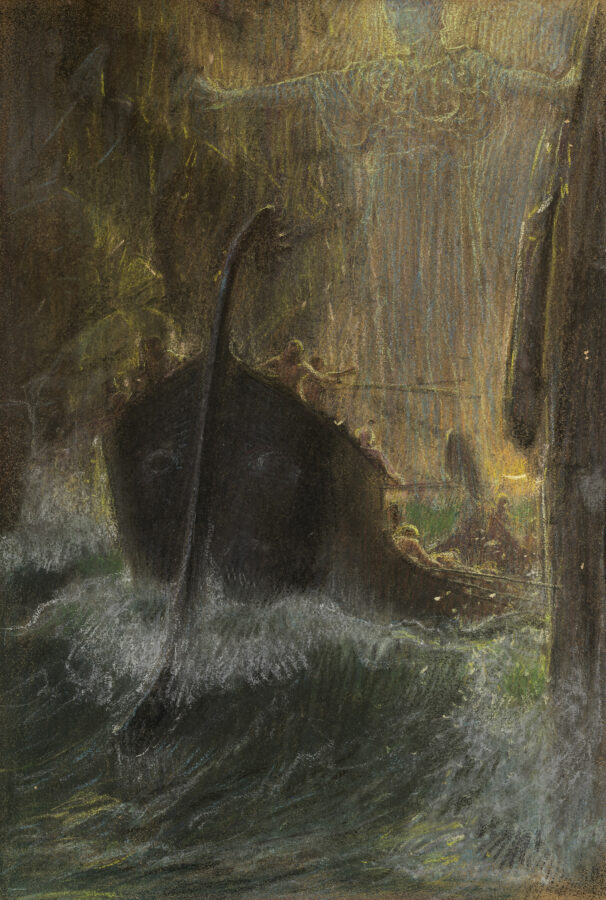
In this study we’ll read selected passages from Homer and look at the great visual artworks they have inspired. Then we will discuss Christopher Nolan’s recently released Odyssey film (opening in the US and UK in July).
The episodes we will consider are: The Sirens, Circe, Polyphemus, and Scylla and Charybdis from The Odyssey; and from The Iliad the death of Hector and the scene between Priam and Achilles. Here is a preview of the visual art we will discuss.
JOINING DETAILS:
- Four-meeting study, live on Zoom, led by Sean Forester
- Tuesdays 6.00-8.00 pm (UK time), 11, 18, 25 August & 1 September 2026
- You may use any translation of The Iliad and Odyssey you prefer.
- £160 for four two-hour meetings
Organizer
Time
Location
LIVE ON ZOOM
Future Event Times in this Repeating Event Series
Book this Salon
Event Details
Free West Indian Creoles in Elegant Dress by Agostino Brunias c. 1780,
Event Details
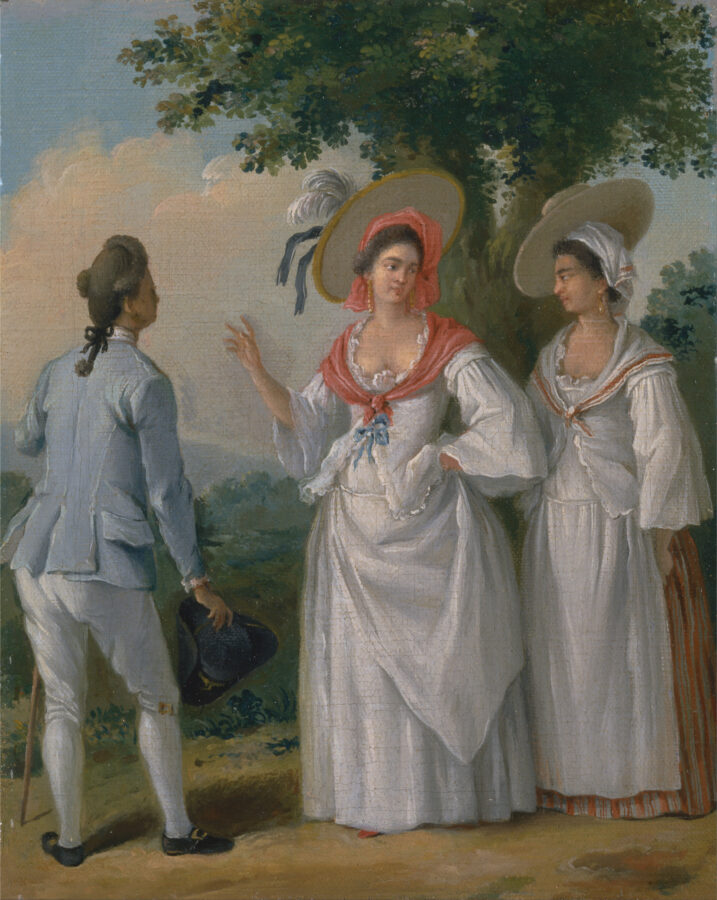
“There is no looking glass here and I don’t know what I am like now. I remember watching myself brush my hair and how my eyes looked back at me. The girl I saw was myself yet not quite myself. Long ago when I was a child and very lonely I tried to kiss her. But the glass was between us—hard, cold and misted over with my breath. Now they have taken everything away. What am I doing in this place and who am I?“
These words, spoken by Antoinette Cosway in Wide Sargasso Sea, depict a woman who has been split into two parts. One (‘a girl’ or ‘child’) she knows, the other is an unknown self who is trapped by the memory of the other. That she should feel this way is quite understandable in light of her circumstances. Although she was born in the West Indies, she now lives at Thornfield Hall in England, and despite her real name being Antionette, her husband has christened her ‘Bertha Mason’ and labelled her mad.
Wide Sargasso Sea extends and deepens the literary classic Jane Eyre by providing a backstory for the mysterious character of Bertha Mason. While Charlotte Bronte left Bertha’s feelings an unknown entity, Rhys places them right at the heart of a narrative that explores racism and colonialism alongside the themes of feminism and personal autonomy.
Participants do not have to have read Jane Eyre to understand Wide Sargasso Sea, but a decent knowledge of the former would be useful. People may wish to use this as an extension to one of the Jane Eyre studies or as a stand-alone study of a mid-20th century classic. Much as it’s tempting to use the novel to read ‘back’ to the 19th century of Bronte’s text, we can also discuss what this text reveals about the culture of the 1960s. We might also consider this in relation to the fall of Empire and the cultural aftermath of that political project.
JOINING DETAILS:
- Five-meeting study, live on Zoom, led by Karina Jakubowicz
- Tuesday 11, 18, 25 August & 1, 8 September 2026, 6.00-8.00 pm (UK)
- Recommended edition: Wide Sargasso Sea by Jean Rhys, Penguin Modern Classics, ISBN-13 : 978-0141182858
- £200 for five two-hour meetings
Organizer
Time
Location
LIVE ON ZOOM
Future Event Times in this Repeating Event Series
Book this Salon
Event Details
Boy on a Beach by Heinrich Hellhoff, Public domain, via Wikimedia Commons
Event Details

“Nobody sees any one as he is, let alone an elderly lady sitting opposite a strange young man in a railway carriage. They see a whole – they see all sorts of things – they see themselves . . .”
Jacob’s Room is widely regarded as Woolf’s first modernist novel, though it’s sometimes overlooked by even the most ardent of her readers. This is a travesty when we consider that the work is such a deft discussion of grief, life writing, and the role of modern fiction. It prefigures the literary playfulness of Orlando while retaining the depth she exhibits inTo the Lighthouse and The Waves.
Jacob’s Room concerns the life of Jacob Flanders, a talented but unheroic young man who hunts butterflies as a boy, goes on to study at Cambridge, and then finally settles in London. His biography is roughly based on that of Woolf’s brother, Thoby Stephen, but in many ways his life could be anyone’s. As the quotation above implies, we see ourselves in a person like Jacob even though (or perhaps because) we only catch glimpses of him.
Questions raised by this novel include:
- How does Woolf intervene in the classic hero’s narrative, and what does her reinvention of this trope say about masculinity and success?
- How does Woolf undermine traditional literary form? Keeping in mind that this is her first modernist novel, we might ask how she subverts conventional structures and eludes our expectations.
JOINING DETAILS:
- Five meeting study, live on Zoom, led by Karina Jakubowicz
- Wednesdays, 12, 19, 26 August & 2, 9 September 2026, 6.00-8.00 pm (UK)
- Recommended edition: Jacob’s Room, Vintage Classics, ISBN: 978-1784877958
- £200 for five two-hour meetings
Organizer
Time
Location
LIVE ON ZOOM
Future Event Times in this Repeating Event Series
Book this Salon
Event Details
Original illustration by John Tenniel, Public domain, via Wikimedia Commons
Event Details

Since its first appearance in print in 1865, Alice’s Adventures in Wonderland has enchanted generations of children with the tale of a little girl who follows a white rabbit down a rabbit hole, to discover a bizarre and fantastical world occupied by equally outlandish and unsettling characters such as the Mad Hatter, the Cheshire Cat and the formidable Queen of Hearts.
Alice is not just for children, adults have read and reread the book, each time uncovering for themselves new layers of meaning: social, political, cultural, metaphysical and, perhaps most frequently, psychoanalytical. For some Alice is a story about growing up, negotiating the complex rules and disturbing unpredictability which seem to govern the adult world (“How the creatures order one about, and make one repeat lessons!” thought Alice); for others it’s a story about revealing identity, the struggle in life to define oneself (“I know who I was when I got up this morning, but I think that I must have changed several times since then”). Some see it as a challenge to find solutions to language games and the logic of nonsense, problems set by Lewis Carroll, aka Charles Dodgson, the Oxford don in mathematics (“Sentence first – verdict afterwards” says the Queen at the trial which concludes the book); while others believe the many surreal, even hallucinatory aspects of the story suggest the disorientating effect of drug use (“What a curious feeling!” said Alice. “I must be shutting up like a telescope!”).
With such a wide range of interpretation, participants will be invited to bring their own interests and areas of expertise to the study, where we can create together a kaleidoscope of meaning. “Why sometimes I’ve believed as many as six impossible things before breakfast!” says the White Queen in Wonderland’s sequel Through the Looking Glass. We will try to combine six (or even more) seemingly contradictory interpretations and seek to provide some sort of meaning, even if that remains elusive and ultimately unstable. Be reassured: no rabbit hole will be too small for us to leave unexplored.
Many readers have clear pictures of the Alice story in their minds, perhaps because of the illustrations which usually accompany the story (“What is the use of a book, without pictures or conversation,” muses Alice before her Adventures begin). John Tenniel’s original illustrations remain definitive, but many other artists – including Arthur Rackham, Mervyn Peake, Salvador Dali, Tove Jansson and Chris Riddell – have also illustrated the text. We will try to take time to look closely at some of Tenniel’s illustrations, and participants will be invited to share their own favourite pictures and other creative works inspired by Alice’s Adventures, in film or music or video game, in fashion or in food.
Please note, in this study there will be opportunities for participants to assume some of Carroll’s larger-than-life characters when those who wish to do so may read selected passages from the book aloud.
JOINING DETAILS:
- Four meeting study, live on Zoom, led by Tim Swinglehurst
- Thursdays, 6.00-8.00 pm (UK time), 13, 20, 27 August & 3 September 2026
- £140.00 for four meetings, including background notes and resources
- Recommended edition: Alice in Wonderland, Lewis Carroll, 4th Norton Critical Edition, edited by Donald J. Gray, 2024. ISBN: 9781324059608. This edition also includes Alice Through the Looking-Glass, Tenniel’s illustrations and critical essays.
- Tim is also offering a LitSalon Short on Alice in Wonderland on 25 June.
REDUCED COSTS: We are committed to making our studies as affordable as possible. We can’t promise to help but please email us if you would like to be considered for a reduced-fee place (your details will be treated as confidential).
Organizer
Time
Location
LIVE ON ZOOM
Future Event Times in this Repeating Event Series
Book this Salon
Event Details
Following the success of our first study at sea in July 2025 – see more about this amazing trip on our
Event Details
Following the success of our first study at sea in July 2025 – see more about this amazing trip on our Gallery – we are pleased to announce that we plan to launch Moby Dick Afloat again in the summer of 2026 (29 August – 4 September).
“Toby is inspiring. We never feel unconfident and we feel safe to think aloud. As a field trip, this is genius.”
Horatio Clare writing in the Financial TImes (2 August 2025) about Moby Dick Afloat 2025
Places are strictly limited by space on board, so please click here to email us if you are interested in knowing more about the possibility of joining next year’s voyage.

This is a not-to-be-missed opportunity to complete reading one of the greatest books ever written in the English language – an extraordinary story of obsession and maritime adventure – over the course of a six-day voyage aboard a traditional sailing ship. Five online meetings (on Tuesdays in late July and early August) will introduce Moby Dick, followed by six study sessions at sea on the Eda Frandsen, a lovingly restored and maintained gaff cutter, originally built in Denmark in 1938. Our unique study will stimulate readers’ imaginations and complement their appreciation of Herman Melville’s text with practical experience of seafaring life under sail.
“I am half way in the work . . . It will be a strange sort of book, tho’, I fear; blubber is blubber you know; tho’ you might get oil out of it, the poetry runs as hard as sap from a frozen maple tree;—and to cool the thing up, one must needs throw in a little fancy, which from the nature of the thing, must be ungainly as the gambols of the whales themselves. Yet I mean to give the truth of the thing, spite of this.”
Herman Melville
First published in 1851, Moby Dick ranks on almost any list as one of the greatest works in the English language. Its three famous opening words ‘Call me Ishmael . . .’ together with the image of the one-legged Captain Ahab in mad pursuit of the great white whale, have become cultural icons. This grand—and occasionally grandiose—adventure tale unites the many voices of Herman Melville in a mongrel mix of epic poetry, Shakespearean tragedy, encyclopaedic cataloguing, biblical oratory, and not a small dose of comedy. Melville presents an insightful study of obsession, madness and charismatic leadership that anticipates many of our contemporary conversations about democracy, cosmopolitanism, capitalism and the environment.
In 2019, celebration of the 200th year since Herman Melville’s birth initiated a particularly auspicious moment to study this great work, generating rich responses and reconsiderations of a truly amazing book. Philip Hoare (mentioned below as one of the curators of the Moby Dick Big Read project) writes on the contemporary importance of this work in the article linked here: Subversive, queer and terrifyingly relevant: Six reasons why Moby Dick is the novel for our times.
“The book features gay marriage, hits out at slavery and imperialism and predicts the climate crisis – 200 years after the birth of its author, Herman Melville, it has never been more important.”
Philip Hoare
Together, artist Angela Cockayne and writer Philip Hoare convened and curated a unique whale symposium and exhibition at Peninsula Arts, the dedicated contemporary art space at Plymouth University. This grew into an extraordinary compilation of art and voices (Tilda Swinton, Stephen Fry and more) – the Moby Dick Big Read – to illuminate each chapter, inspiring and inspired by this vast book.
SALON DETAILS:
- The study will involve five two-hour online preparatory meetings on Zoom (on Tuesdays in July and August), followed by a six-day study trip with six nights on board the sailing ship Eda Frandsen.
- Facilitated by Toby Brothers, Salon Director
- Recommended edition: Moby Dick (Norton Critical Edition, Third Edition 2018), by Herman Melville, edited by Herschel Parker; W.W. Norton & Co. ISBN-13: 978-0393285000
- The cost for five online meetings, opening notes and the six-night voyage with study sessions led by Toby will be £1,950 per person payable in advance.
- Participants will be responsible for arranging their own travel to and from our departure and end point, the port of Mallaig on the west coast of the Scottish Highlands, as well as personal insurance to cover their trip.
- Please note that the voyage will involve sharing confined living and sleeping space while onboard. We do not require you to have nautical skills, but some time spent on sailing boats or camping would be useful so you know what to expect.
- Even in summer it is possible that there may be rough seas and weather, so please consider carefully your general level of health and fitness and whether you are likely to be adversely affected by these conditions.
- Places are strictly limited and we are not using our normal booking form for this study. Please email toby@litsalon.co.uk if you are interested in the possibility of joining next year’s voyage.
Organizer
Time
Location
Mallaig, Scotland
September 2026
Event Details
Gyula Benczúr, Public domain, via Wikimedia Commons
Event Details
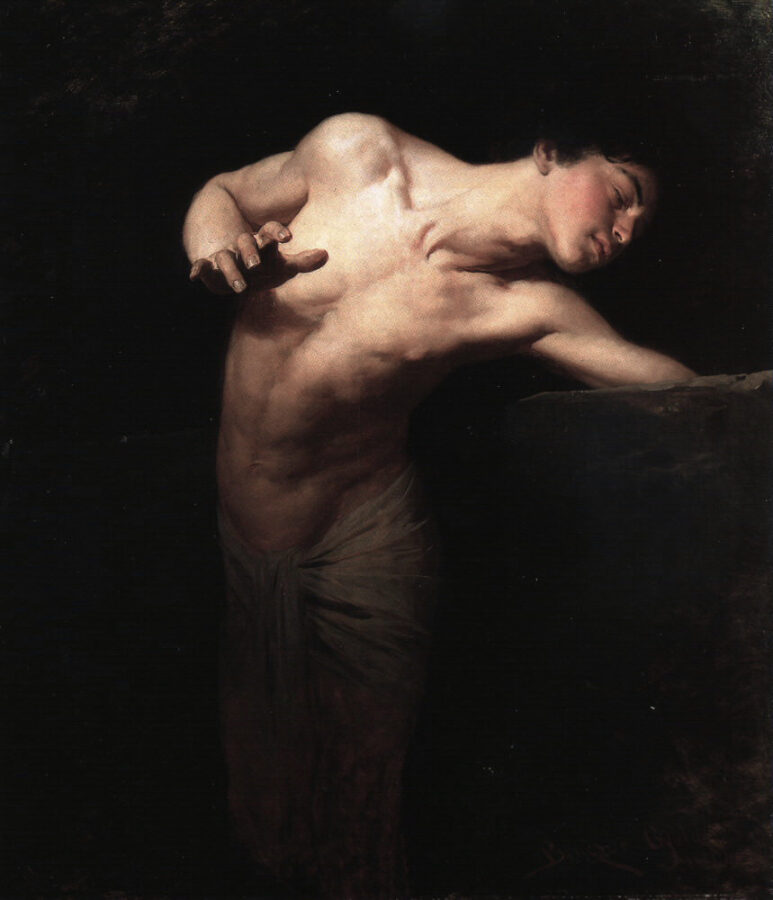
In this study we’ll read selections from Ovid’s Metamorphoses and discuss the text together with a wide range of paintings inspired by it. We will focus on the following myths: Ovid’s creation myth, Apollo and Daphne, Jupiter and Io, Echo and Narcissus, Bacchus and Ariadne, Arachne, Prometheus, Orpheus, Pluto and Persephone, Phaeton, Daedelus, Icarus, Hercules.
Here is a preview of the artworks we will discuss in this study which was inspired by Sean Forester’s recent visit to the Metamorphoses exhibition at the Rijksmuseum in Amsterdam.
JOINING DETAILS:
- Four-meeting study led by Sean Forester, live on Zoom
- Mondays 6.00-8.00 pm (UK time), 7, 14, 21 & 28 September 2026
- Recommended text: you may use any translation you prefer, providing it has line numbers clearly marked. Two good options are Metamorphoses translated by Stephanie McCarter (Penguin Classics) or Metamorphoses: The New Annotated Edition translated by Rolfe Humphries (Indiana University Press).
- £160 for four two-hour meetings
Time
Location
LIVE ON ZOOM
Book this Salon
Event Details
Event Details

“Tamburlaine the Great.
Who, from a Scythian Shepherd
by his rare and wonderful Conquests
became a most puissant and mightye Monarque,
And (for his tyranny, and terrour in Warre) was termed
The Scourge of God.”
So reads the 1590 title page of the printed version of recent smash hits on the Elizabethan stage, the two parts of Christopher Marlowe’s Tamburlaine. Nothing was to be the same again. As Professor Stephen Greenblatt has written in his recent monograph on Marlowe (Dark Renaissance, 2025), “Virtually everything in the Elizabethan theatre is pre- and post-Tamburlaine. Most literary innovation is incremental; it is rare for a work of art to change everything so quickly and decisively. But Tamburlaine is one of those rare instances.”
The plays plot the career of Tamburlaine, who from his origins as a humble shepherd conquers the mighty empires of Persia and Turkey and makes inroads into Europe, a trajectory encompassing the most horrific acts of cruelty and barbarity, yet all done to the accompaniment of the most extraordinary language.
Tamburlaine established unrhymed iambic pentameter (what we now call blank verse) as the dominant form for English drama, a form adopted and developed by Marlowe’s contemporary Shakespeare. Here was a fresh verbal music to ravish the ears of Elizabethan audiences, with its “high astounding terms” and pyrotechnical rhetorical flourishes, but also a form capable of expressing tender intimacy and labyrinthine inward reflection. The language of Tamburlaine is exotic and intoxicating, incorporating spellbinding repetitions of words and names – Zenocrate, Usumcasane, Persepolis – it is a thrill to read aloud, and there will be plenty of opportunities to do this during the study.
Marlowe’s Tamburlaine is a character who provokes varied reactions and questions. Is he a conquering hero or a bloodthirsty tyrant? Are we meant to respond to him with horrified revulsion or vicarious pleasure, ravished by his language and superhuman energy and daring? Here is a man of unlimited aspiration, unconstrained power and an inhuman consistency of purpose, a progenitor of Shakespeare’s Richard III, Milton’s Satan and Melville’s Ahab, an analogue for many real-life political leaders, even in our own times.
In this study we will read through Part 1 of Tamburlaine. If there is interest, we will follow with the sequel, in which “Tamburlaine the scourge of God must die”.
JOINING DETAILS:
- Five meeting study, live on Zoom, led by Tim Swinglehurst
- Wednesdays, 6.00-8.00 pm (UK time), 16, 23, 30 September & 7, 14 October 2026
- Recommended edition: Tamburlaine, Parts One and Two by Christopher Marlowe, edited by Anthony B. Dawson, Methuen Drama (UK), 2003. ISBN: 978-0-7136-6814-8.
- £175.00 for five meetings, including background notes and resources.
REDUCED COSTS: We are committed to making our studies as affordable as possible. We can’t promise to help but please email us if you would like to be considered for a reduced-fee place (your details will be treated as confidential).
Organizer
Time
Location
LIVE ON ZOOM
Future Event Times in this Repeating Event Series
Book this Salon
Event Details
Event Details

Now more than ever it seems right to read Vladimir Nabokov’s masterpiece, Lolita (1955). The man who famously described himself as “an American writer, born in Russia” understands his adopted country as only an immigrant can.
Born into Russian nobility, Nabokov fled for his life twice: first escaping the 1917 Revolution for Berlin and Paris, and then, in 1940, fleeing Nazi-era Paris for New York City alongside his Jewish wife, Véra. A respected lepidopterist, Nabokov spent years working at the Harvard Museum of Comparative Zoology.
The immigrant, the scientist and the novelist brought all he knew about camouflage, metamophosis, mimicry, migration and classification to his writing.
Lolita combines Nabokov’s keen observations of the new, post-World War II superpower that was late 1940s America with his scalpel-like dexterity with the English language.
One of the world’s most banned books? Yes.
A savage send-up of a country awash in Norman Rockwell imagery and pop psychology? A land where clueless elites become intellectually complicit in a world that infantilises adults while sexualising children? Yes.
Narrated through the notoriously unreliable perspective of one Humbert Humbert, aka Paedophile-in-Chief? Yes.
Hilarious and infuriating by turns, but always mesmerising? Yes.
JOINING DETAILS:
- Eight-meeting study led by Dr Nancy Goldstein
- 17 September – 5 November 2026
- Thursdays, 6.30-8.30 pm (UK time)
- £320 for eight two-hour meetings
- Recommended edition The Annotated Lolita (Penguin Modern Classics, 2000): ISBN: 978-0141185040
Organizer
Time
Location
LIVE ON ZOOM
Future Event Times in this Repeating Event Series
Book this Salon
Event Details
Event Details
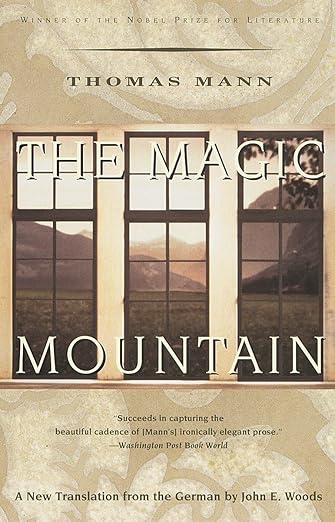
Thomas Mann’s 1924 novel The Magic Mountain is often grouped with two other giant literary classics, James Joyce’s Ulysses and Proust’s Remembrance of Things Past. Together these works are seen as the formative novels of the Modernist era.
A first dip into the text of The Magic Mountain reveals an accessible, lilting narrative in which readers soon find themselves considering time, society, passion and memory from the particular perspective of an invalid needing medical care in an environment far removed from regular life. But we are not concerned solely with the beauty of the prose, but about the power and seduction of the realm of the mind.
Unlike some books we study in the Salon, the challenge of reading The Magic Mountain lies not just in decoding and teasing out the themes, patterns and narrative play (although we do have a VERY playful narrator), but in grasping mountainous ideas: philosophies, paradigms and approaches to constructing our lives in purposeful ways. Do we aim for the purity of transcendent music? Do we indulge in the decadence of the senses when we recognise the limits of time? Do we try to catalogue suffering and thus reveal the beautiful rationality of humankind and our ability to overcome the pain of living? All this is considered from the rarefied perspective of this mountain retreat, a Swiss Sanatorium on the verge of the First World War.
Often funny, occasionally erotic, moments of the fantastical clash with the absurd, feasts, suicides, seances and war . . . it is a packed book that is also deeply political. Written between the First and Second World Wars, The Magic Mountain engages with questions of nationalism and nostalgia, with the shadow of future events shifting the weight of the ironic stance that Mann assumes.
A little knowledge of some of the German and Austrian thinkers whose fingerprints can be found in the pages – Nietzsche, Schopenhauer, Freud, Heidegger – can be helpful but is not necessary for a thoroughly satisfying read. During the course of this study we will invite Keith Fosbrook to share a little of his expertise in this area with the group.
JOINING DETAILS:
- Thirteen week study, live on Zoom, led by Toby Brothers and Sarah Snoxall with additional contribution from Keith Fosbrook.
- Tuesdays, 5.30-7.30 pm (UK time), 22 September – 15 December 2026.
- Recommended edition: The Magic Mountain by Thomas Mann, translated by John E. Woods, Vintage, ISBN-13 : 978-0679772873.
- £490 for thirteen-week study.
REDUCED COSTS: we are committed to making our studies as affordable as possible. We have a fund in place to support anyone who would like to register for a study but finds the cost difficult to afford. We can’t promise to help, but please email us at litsalon@gmail.com in confidence if you would like to request a reduction in the cost of a study.
Time
Location
LIVE ON ZOOM
Future Event Times in this Repeating Event Series
Book this Salon
Event Details
We have a well-established Salon tradition of spending some time each autumn on the Cornish coast
Event Details
We have a well-established Salon tradition of spending some time each autumn on the Cornish coast reading Virginia Woolf’s work and enjoying one of the places she loved and in which she spent significant parts of her childhood. This year we are again offering two Woolf studies in St Ives: To the Lighthouse from 26 to 29 September and The Waves from 2 to 5 October 2026.
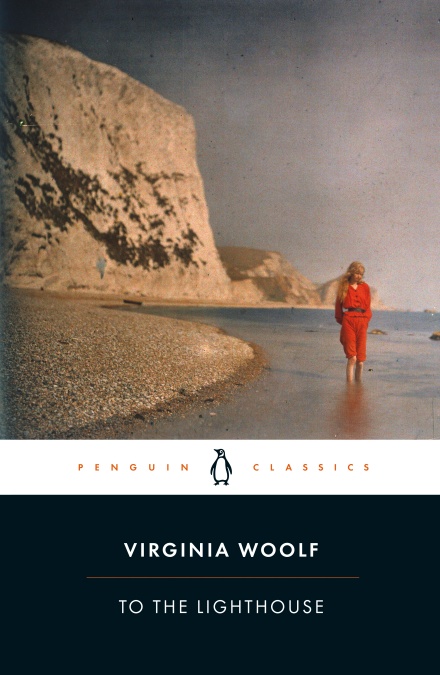
In this, our seventh travel study devoted to reading To the Lighthouse in the magical environment that inspired it, the experience will be made even more special by the book’s impending centenary. First published on 5 May 1927, this extraordinary work rewards reading and re-reading, revealing new facets of Woolf’s world with every encounter. Toby Brothers, founder of the London Literary Salon and co-facilitator of the study, reveals that even after more than twenty readings she still learns from the book, finding new resonances and greater understanding to share with study participants new and old.
Woolf’s reputation as one of the key members of the celebrated Bloomsbury Group, means that many see her primarily as a London writer, yet the Cornish coastal town of St Ives – where she spent many childhood summers – serves as a prism through which we can explore her perspectives on landscape, domesticity and identity, and their relevance to her time and our own.
“This is something I have dreamed of doing since I first read Woolf’s magical book To the Lighthouse – it has haunted me always. The opportunity to study this work with a keen group of minds in the place that is so crucial to the writing is simply delicious.“
Toby Brothers
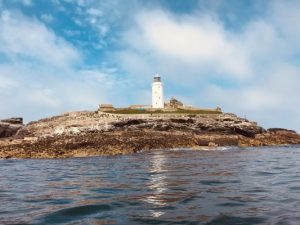
During our visit you will have opportunities to visit the iconic Tate St Ives gallery overlooking the Atlantic Ocean, built between 1988 and 1993 on the site of an old gasworks, and the Barbara Hepworth Museum & Sculpture Garden. If weather allows, there will be an optional boat trip to Godrevy Lighthouse and we also hope to look at Talland House, Woolf’s childhood summer home (now privately owned). Until Virginia’s mother, Julia Stephen, died in 1895, the elegant house overlooking St Ives Bay would be the Stephens’ family home for several months of each year. Although the complete family never returned to St Ives after their mother’s death, her children travelled back in 1905 following the death of their father in the previous year.

“If life has a base that it stands upon, if it is a bowl that one fills and fills and fills – then my bowl without doubt stands upon this memory. It is of lying in bed, half-asleep, half awake, in bed in the nursery at St Ives. It is of hearing the waves breaking, one, two, one, two, and sending a splash of water over the beach; and then breaking, one, two, one two, behind a yellow blind . . . If I were a painter I should paint these impressions in pale yellow, silver, and green. There was the pale yellow blind; the green sea; and the silver of the passion flowers.
“Here is the past and all its inhabitants miraculously sealed as in a magic tank.
“The past only comes back when the present runs so smoothly that it is like the sliding surface of a deep river. Then one sees through the surface to the depths. The past sometimes presses so close that you can feel nothing else.”
Virginia Woolf, “Sketch of the Past”, begun in June 1939

“What is the meaning of life? That was all – a simple question; one that tended to close in on one with years, the great revelation had never come. The great revelation perhaps never did come. Instead, there were little daily miracles, illuminations, matches struck unexpectedly in the dark; here was one.”
Virginia Woolf, To the Lighthouse
Feedback from participants in previous St Ives studies:
“The studio where the discussion took place is a beautiful, extraordinary place, the participants were imbued with the light and landscape, creating a friendly and committed atmosphere. The two facilitators were wonderful . . .”
“The collaboration between participants and facilitators was rich indeed, and I wonder how it was accomplished that everyone in the group was so insightful and intelligent and I might even say soul-searching . . . I also think it was just a superb group of people.”
Read Salonista Leah Jewett’s account of a Salon Study in St Ives here.

SALON DETAILS:
- The cost of the study is £600. Please use the form below to secure your place with an initial registration deposit of £60.00. Once you have registered we will then send you details for payment of the balance owing (£540.00) to complete your booking by bank transfer.
- Facilitated by Toby Brothers and Sarah Snoxall
- Our meetings will take place in the fabulous Porthmeor Studios
- 26 to 29 September 2026 (this will enable approximately 14 hours of study)
- Recommended edition: To the Lighthouse, by Virginia Woolf, with introduction by Hermione Lee, Penguin Classics, ISBN: 9780241371954
- The cost of £600 covers facilitation, notes and critical resources (N.B. travel, food and accommodation are NOT included and participants are responsible for arranging their own travel, accommodation and insurance).
- We recommend booking your accommodation at the earliest opportunity. Places where previous participants have enjoyed staying include No 4 St Ives, 3 Porthminster Terrace, Blue Sky, The Olive Branch, Rivendell and the Harbour View Hotel, there may also be options with Airbnb. PLEASE check web details and compare review sites before you book to make sure your needs will be met.
More on the study:
As one of the primary modernist works, To the Lighthouse demonstrates Woolf at play with language; testing the ability of language to truly reflect human experience by recording the life of the mind not just action. One of the characteristics of modernist writing is a shifting centre of narrative perspective, reflecting a questioning of ultimate and moral authority at a time experiencing the dissolution of Imperialism and absolute values.
Writing from the edge of the violent shift from the Victorian to the Modernist era, Woolf’s ambivalence is demonstrated in her work. She struggles against the boundaries and structures of the Victorian age while holding a great longing and nostalgia for the noble traditions of the time. Her model, Mrs. Ramsey, (queen-like) holds her daughters to the awe of the noble men that surround her and allows them to “sport with infidel ideas…of a life different…in Paris perhaps; …for there was in all their minds a mute questioning of deference and chivalry…though to them all there was something in this of the essence of beauty, which called out the manliness in their girlish hearts…” (To the Lighthouse, pages 10-11).
This quote also demonstrates the Modernist reworking of absolute truth…it is not a question of either this (a male-dominated world) or that (a world of female emancipation): the apparently rigid gender roles borrow from each other — “manliness in their girlish hearts”, “Indeed, she had the whole of the other sex under her protection…” — there is another imperialism here, an intimate imperialism of female over male. The truth in this work is not rigid (although Mr. R would like it to be) but can be permeated, blended — seen from another view.
Re-reading Hermione Lee’s biography of Virginia Woolf (a review of which is quoted below) has me turning over the search one makes for lost childhood, often for a place that might hold a time but, of course, never does. For Woolf, that search included a grappling with the impact and idealisation of the parent figures — especially the lost mother, whose influence and contradictions continue to wrap around the child inside. Virginia Woolf and a few of her siblings returned to the house in St Ives (that we are lucky enough to visit) years after her mother’s death and the sale of the house. They were like ghosts, sneaking around the gardens, peering in the windows: as though searching for their lost selves and a past that can never be recaptured. That visit — and the need to lay to rest her grief-enwrapped memories of her mother — was the catalyst for To the Lighthouse.
For those who want to go further, here is an excerpt from a review of Hermione Lee’s Virginia Woolf:
“Ms. Lee documents the evolving perception of her subject from ”the delicate lady authoress of a few experimental novels and sketches, some essays and a ‘writer’s’ diary, to one of the most professional, perfectionist, energetic, courageous and committed writers in the language.” She does this without recourse to the politicised agendas of the academy or special pleading (all of Woolf’s flaws are on display here); this account sets itself above the fray, the better to home in on the glittery and elusive creature at its centre — the prize catch in what one critic has described as the Bloomsbury pond. From its very first page, Ms. Lee’s book is informed by current thinking on how to approach the writing of someone’s life: “There is no such thing as an objective biography, particularly not in this case. Positions have been taken, myths have been made.” But it is also infused with a very personal passion for her subject, which enables the author to cut crisply through the labyrinth of theories that have sprung up…”
– Daphne Merkin, This Loose, Drifting Material of Life
Although To the Lighthouse is not autobiographical, many critics and readers have found close parallels between Woolf’s early life and the world presented in the book. As we go into the read, it may help you to have a sense of Virginia Woolf and her precarious position as a visionary on the edge of a violently changing world. I will have more biographical notes for you when we start.
Time
Location
St Ives, Cornwall
Book this Salon
Booking deposit £60 to be paid on registration, the balance of £540 will be payable by end of July 2026.
All places are booked
October 2026
Event Details
We have a well-established Salon tradition of spending some time each autumn on the Cornish coast
Event Details
We have a well-established Salon tradition of spending some time each autumn on the Cornish coast reading Virginia Woolf’s work and enjoying one of the places she loved and in which she spent significant parts of her childhood. This year we are again offering two Woolf studies in St Ives: To the Lighthouse from 26 to 29 September (when we will also celebrate the approaching centenary of the first publication of the book in May 1927) and The Waves from 1 to 4 October 2026.
Woolf’s reputation as one of the key members of the celebrated Bloomsbury Group, means that many see her primarily as a London writer, yet the Cornish coastal town of St Ives – where she spent many childhood summers – serves as a prism through which we can explore her perspectives on landscape, domesticity and identity.
“Thus when I come to shape here at this table between my hands the story of my life and set it before you as a complete thing, I have to recall things gone far, gone deep, sunk into this life or that and become part of it; dreams, too, things surrounding me, and the inmates, those old half-articulate ghosts who keep up their hauntings by day and night; who turn over in their sleep, who utter their confused cries, who put out their phantom fingers and clutch at me as I try to escape—shadows of people one might have been; unborn selves.”Virginia Woolf, The Waves
Reading Virginia Woolf requires a release of the faculty we have so carefully trained to be grounded in time and fact. Her fluid and probing prose allows such a deep and troubling glimpse into the human heart that one comes away wiser and broader than before. This is not my first floating into The Waves, what I have already experienced makes me want to swim far out into her embracing world of character and reflection.
We invite you to join us in St Ives to explore this lovely place and share the work with a group of other keen minds.
I love this review of The Waves from Goodreads:
‘My umpteenth reading of The Waves and it still floors me. There’s not a wasted word here: Woolf’s attention to rhythm—she was listening to Beethoven’s String Quartet in B-flat Minor, Opus 130 while writing this novel, and Beethoven’s nuances are found in her prose at all turns—and the ways in which she questions subjectivity, interpersonal relations, the ways in which we are connected and yet disparate from those around us are on display here more so than in any of her other fictional works.
‘The last section is sadly not as famous as the last section in Joyce’s Ulysses, but it may well be even more gut-wrenchingly brutal in its philosophical underpinnings and the ways in which Woolf engages with poetics to sustain the flow of her inquiries into what it means to be human. On each reading there is something more to be found here, something more to be learned, something to relish and treasure, some keen diamond-edged truth that slices just as much as it illuminates.’
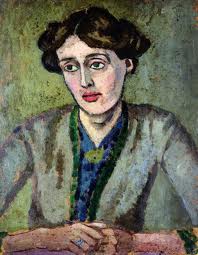
During our visit you will have opportunities to visit the iconic Tate St Ives gallery overlooking the Atlantic Ocean, built between 1988 and 1993 on the site of an old gasworks, and the Barbara Hepworth Museum & Sculpture Garden. If weather allows, there will be an optional boat trip to Godrevy Lighthouse and we also hope to look at Talland House, Woolf’s childhood summer home (now privately owned). Until Virginia’s mother, Julia Stephen, died in 1895, the elegant house overlooking St Ives Bay would be the Stephens’ family home for several months of each year. Although the complete family never returned to St Ives after their mother’s death, her children travelled back in 1905 following the death of their father in the previous year.
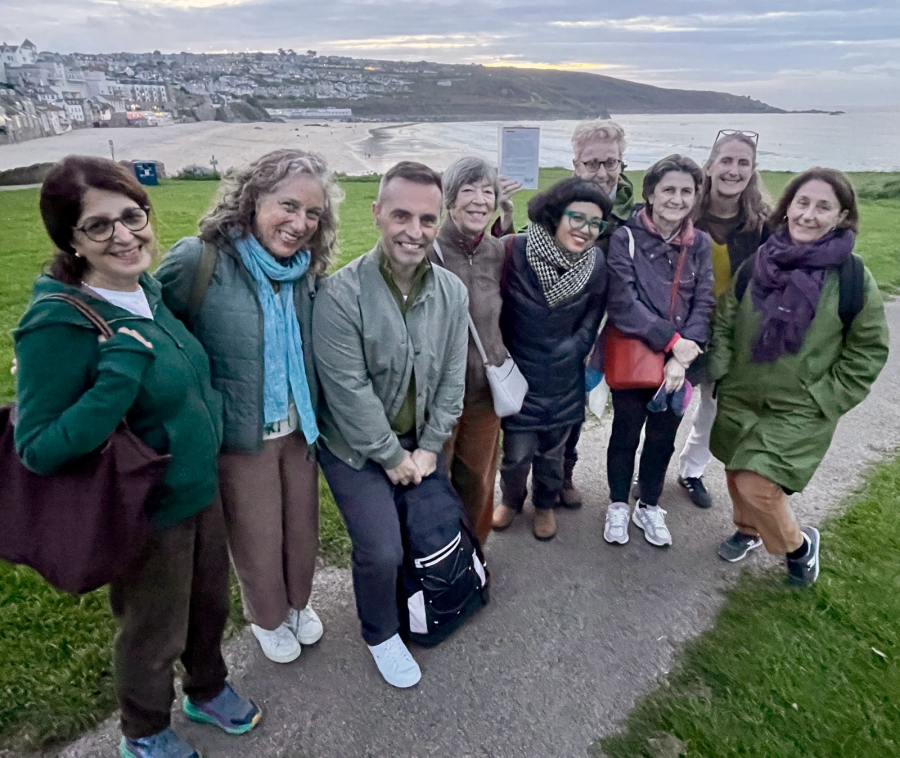
Feedback from participants in previous St Ives studies:
“The studio where the discussion took place is a beautiful, extraordinary place, the participants were imbued with the light and landscape, creating a friendly and committed atmosphere. The two facilitators were wonderful . . .”
“The collaboration between participants and facilitators was rich indeed, and I wonder how it was accomplished that everyone in the group was so insightful and intelligent and I might even say soul-searching . . . I also think it was just a superb group of people.”

Read Salonista Leah Jewett’s account of a Salon Study in St Ives here.
JOINING DETAILS:
- The cost of the study is £600. Please use the form below to secure your place with an initial registration deposit of £60.00. Once you have registered we will then send you details for payment of the balance owing (£540.00) to complete your booking by bank transfer.
- Facilitated by Toby Brothers and Sarah Snoxall
- Our meetings will take place in the fabulous Porthmeor Studios
- 1 to 4 October 2026 (this will enable approximately 14 hours of study)
- Recommended editions: The Waves by Virginia Woolf, Vintage Classics, ISBN-13:
978-1784870843 or Penguin Classics, ISBN-13: 978-0241372081 - The cost of £600 covers facilitation, notes and critical resources (N.B. travel, food and accommodation are NOT included and participants are responsible for arranging their own travel, accommodation and insurance).
- We recommend booking your accommodation at the earliest opportunity. Places where previous participants have enjoyed staying include No 4 St Ives, 3 Porthminster Terrace, Blue Sky, The Olive Branch, Rivendell and the Harbour View Hotel, there may also be options with Airbnb. PLEASE check web details and compare review sites before you book to make sure your needs will be met.
Time
Location
St Ives, Cornwall
Book this Salon
Booking deposit £60 to be paid on registration, the balance of £540 will be payable by end of July 2026.
Event Details
Gustave Doré, Dante’s Purgatorio, Public domain, via Wikimedia Commons
Event Details
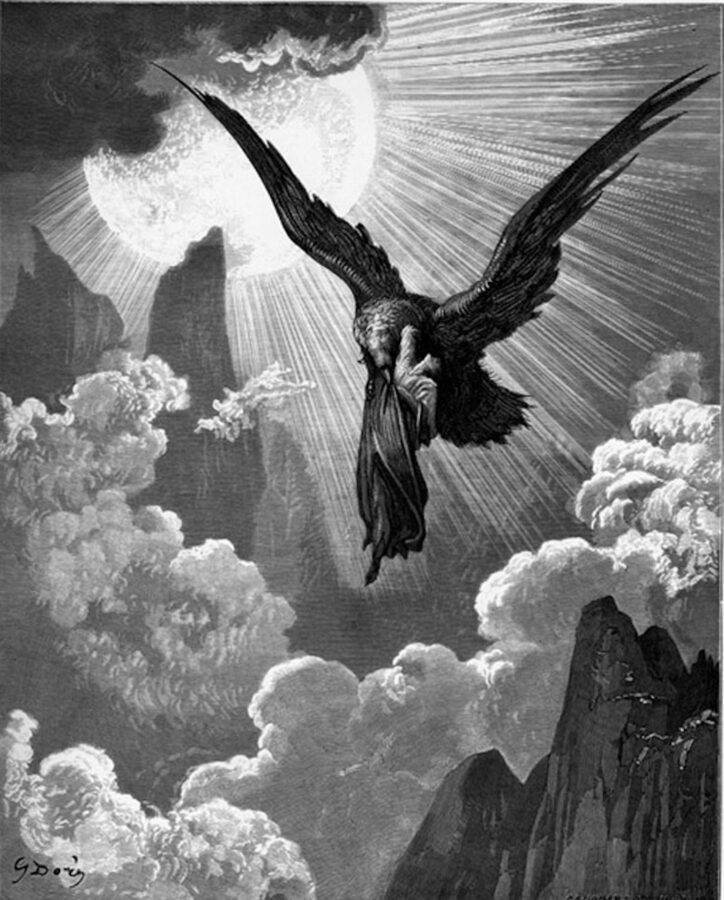
Dante’s epic journey through the afterlife continues in the Purgatorio. Here the poet explores self-transformation: How do we let go of pride, hatred, lust, jealousy and greed? How can we move from cruelty and to kindness, from sin to salvation?
Dante writes in the first person as a very human voyager, reacting with strong and varied emotions to the characters before him, just as the reader might. As we pass through an array of landscapes, each appropriate to the sins and purgations there, Dante undergoes a kind of transformation himself. And he challenges us to do the same.
You don’t need to have read Dante’s Inferno to join this study. Dante, like Joyce, is an ideal author for in-depth study at the LitSalon. The Divine Comedy has multiple meanings that provide rich material for discussion, weaving together myth, theology, history and the contemporary life of Dante’s time. We will explore Dante’s relationship with Virgil and Beatrice, and with several other vivid personalities he meets along his way.
According to T.S. Eliot, “The whole study and practice of Dante seems to me to teach that the poet should be the servant of his language, rather than the master of it.” Join us in reading one of the classics of world literature. You will be welcome to use whichever translation of Dante you prefer, but Sean will be using the translation by D.M. Black, whose notes and commentary are especially focused on the Purgatorio’s implications for psychological self-transformation.
JOINING DETAILS:
- Eleven meeting study (on Zoom) led by Sean Forester
- Thursdays, 5.30-7.30 pm (UK time)
- 1, 8, 15, 22, 29 October; 5, 12, 19 November; 3, 10, 17 December 2026 (N.B. no meeting on 26 November, Thanksgiving)
- £440 for eleven two-hour meetings, to include opening notes and resources
- Recommended edition: Dante’s Purgatorio, translated by Jean Hollander & Robert Hollander, ISBN: 978-0385497008
Organizer
Time
Location
LIVE ON ZOOM
Future Event Times in this Repeating Event Series
Book this Salon
Event Details
“Every reader finds himself. The writer’s work is merely a kind of optical instrument that makes it
Event Details
“Every reader finds himself. The writer’s work is merely a kind of optical instrument that makes it possible for the reader to discern what, without this book, he would perhaps never have seen in himself.”
Marcel Proust
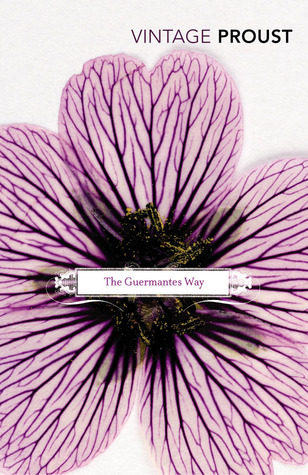
Facilitator Toby Brothers writes:
Marcel Proust’s In Search of Lost Time is one of the mountains of Modernism. This is my eighth tour through the Search and each visit reveals new nuggets and gasping moments. This third volume considers closely the draw of the social dance and the realm of social power: you might not think the anxious aristocracy of the Belle Epoque will teach you something about the world you live in – you will be surprised. The groups who have made it through the first two volumes in the last six months are lively and welcoming and we have room for two or three more to join us. If you have not read the first two volumes previously, please contact us to discuss.
Here is how one Salonista describes the pleasure and work of reading Proust: “This is a velvet jewel of a book that demands the attention of a lover full of enchantment and obsession, we need not get impatient as all good lovers perfect their art in taking their time.”
While another observes: “I feel really privileged to be gaining a better understanding of Proust’s amazing work and be able to enjoy the intricacies of his language and thoughts . . . the meetings allow plenty of time and space for exploration and our study is reinforced by emails and relevant essays in between meetings. I am very grateful to have this opportunity to join the study.”
Reading Proust teaches the reader to observe how the world is experienced, to be aware that although humans are tempted to give greater weight to the perceptual universe, it is the entwining of memory, idealised experience (dreams) and relationships with what our senses perceive that moulds our consciousness.
JOINING DETAILS:
- It may be possible for new members to join this group of readers. If you are interested please email litsalon@gmail.com using the subject heading: ‘Joining Proust Group’.
- Facilitated by Toby Brothers
- Wednesdays, 3.00-5.00 pm (UK time)
- Thirteen meeting study: 7 October – 9 December 2026, resuming from 13 January – 3 February 2027, N.B. these dates cover 14 weeks allowing one ‘spare’ week for use in case of illness.
- Recommended edition: Vintage Classics (Moncrieff/Kilmartin/Enright) ISBN-13: 978-0099362418
- £455 for thirteen meetings, includes background materials, literary criticism, opening notes and discussion notes.
Organizer
Time
Location
VIRTUAL
Future Event Times in this Repeating Event Series
Book this Salon
Event Details
“Every reader finds himself. The writer’s work is merely a kind of optical instrument that makes it
Event Details
“Every reader finds himself. The writer’s work is merely a kind of optical instrument that makes it possible for the reader to discern what, without this book, he would perhaps never have seen in himself.”
Marcel Proust
Facilitator Toby Brothers writes:
Marcel Proust’s In Search of Lost Time is one of the mountains of Modernism. This is my eighth tour through the Search and each visit reveals new nuggets and gasping moments. This third volume considers closely the draw of the social dance and the realm of social power: you might not think the anxious aristocracy of the Belle Epoque will teach you something about the world you live in – you will be surprised. The groups who have made it through the first two volumes in the last six months are lively and welcoming and we have room for two or three more to join us. If you have not read the first two volumes previously, please contact us to discuss.
Here is how one Salonista describes the pleasure and work of reading Proust: “This is a velvet jewel of a book that demands the attention of a lover full of enchantment and obsession, we need not get impatient as all good lovers perfect their art in taking their time.”
While another observes: “I feel really privileged to be gaining a better understanding of Proust’s amazing work and be able to enjoy the intricacies of his language and thoughts . . . the meetings allow plenty of time and space for exploration and our study is reinforced by emails and relevant essays in between meetings. I am very grateful to have this opportunity to join the study.”
Reading Proust teaches the reader to observe how the world is experienced, to be aware that although humans are tempted to give greater weight to the perceptual universe, it is the entwining of memory, idealised experience (dreams) and relationships with what our senses perceive that moulds our consciousness.
JOINING DETAILS:
- It may be possible for new members to join this group of readers. If you are interested please email litsalon@gmail.com using the subject heading: ‘Joining Proust Group’.
- Facilitated by Toby Brothers
- Wednesdays, 5.30-7.30 pm (UK time)
- Thirteen meeting study: 7 October – 9 December 2026, resuming from 13 January – 3 February 2027, N.B. these dates cover 14 weeks allowing one ‘spare’ week for use in case of illness.
- Recommended edition: Vintage Classics (Moncrieff/Kilmartin/Enright) ISBN-13: 978-0099362418
- £455 for thirteen meetings, includes background materials, literary criticism, opening notes and discussion notes.
Organizer
Time
Location
VIRTUAL
Future Event Times in this Repeating Event Series
Book this Salon