This is a repeating event- Event 2 / 621 October 2026 6:30 pm4 November 2026 6:30 pm
The Age of Innocence - Edith Wharton
Event Details
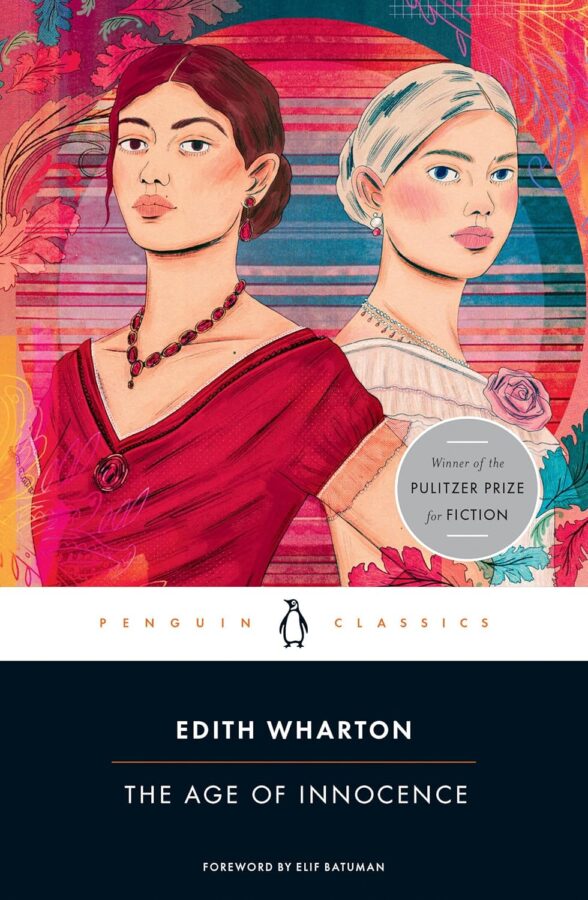
Published in 1920 — the same year American women won the right to vote — The Age of Innocence is set in a world Edith Wharton knew from the inside: Old New York society, a closed world of inherited money and rigid ritual revolving around the unspoken rule that nothing shall ever, under any circumstances, be said plainly. What cannot be acknowledged cannot threaten. What cannot be named cannot exist.
Into this airless world arrives Countess Ellen Olenska, who has had the bad taste to flee an abusive marriage and the worse taste to expect her family’s support. She is sophisticated, unconventional, and faintly European. In short, dangerous. Newland Archer is engaged to the exquisitely correct May Welland. He should not be thinking about Ellen Olenska at all. What follows is a love story in which almost nothing happens and everything is at stake.
The Age of Innocence won the Pulitzer Prize in 1921, making Wharton the first woman to receive it. The jury had voted for Sinclair Lewis’s Main Street, only to be overruled by Columbia University’s conservative trustees, who found Lewis’s satire insufficiently “wholesome” — and awarded the prize to a novel whose entire project is the dissection of the world that word protects. Wharton, on learning the prize was meant for Lewis, wrote to him: “When I discovered that I was being rewarded — by one of our leading Universities — for uplifting American morals, I confess I did despair.”
In a cultural moment defined by the performance of virtue and the management of image — by the gap between the life curated for public consumption and the life actually lived — Wharton’s diagnosis of how societies enforce conformity, and what it costs the people who comply, has never felt more precise. She knew that the real cost of a society built on appearances isn’t borne by the people who break the rules. It’s borne by the people who keep them.
Let us read.
JOINING DETAILS:
- Six-meeting study, live on Zoom, led by Dr Nancy Goldstein
- 21 October – 25 November 2026
- Wednesdays, 6.30–8.30 pm (UK time)
- £240 for six two-hour meetings
- Recommended edition: The Age of Innocence, Penguin Classics, 1996. ISBN: 9780140189704
REDUCED COSTS: we are committed to making our studies as affordable as possible. We have a fund in place to support anyone who would like to register for a study but finds the cost difficult to afford. We can’t promise to help, but please email us at litsalon@gmail.com in confidence if you would like to request a reduction in the cost of a study.