This is a repeating event14 July 2026 8:00 pm28 July 2026 8:00 pm
The Picture of Dorian Gray - Oscar Wilde
Event Details
“. . . Unclean . . . spawned from the leprous literature of the French decadents — a poisonous book . . . ”
“Dull and nasty . . . stupid and vulgar . . . immoral. It may be suggested that Wilde derives pleasure from treating a subject merely because it is disgusting.”
“The poor public, hearing from an authority so high as your own, that this is a wicked book that should be coerced and suppressed by a Tory Government, will, no doubt, rush to it and read it. But, alas, they will find that it is a story with a moral. And the moral is this: All excess, as well as all renunciation, brings its own punishment. ”
Oscar Wilde, from his response to the St. James Gazette review, 25 June 1890
Joseph Marshall Stoddart, Oscar Wilde’s editor in the Philadelphia offices of Lippincott’s Magazine, was neither a bumpkin nor a prude: in 1882 he arranged for Wilde to visit Walt Whitman in Camden, New Jersey, during his American visit. But, alarmed by material he feared readers would find “offensive”, and unbeknownst to its author until after publication, Stoddart went through Wilde’s original manuscript, pencil in hand, crossing out some 500 words to render it “acceptable to the most fastidious taste.”
In short, the novel that Wilde’s irate fin de siècle reviewers deemed filth was already a bowdlerised version of The Picture of Dorian Gray.
The contemporary reader, fresh from watching the latest episode of RuPaul’s Drag Race, may struggle to understand the fury that The Picture of Dorian Gray unleashed in the 1890s. Or the stench it carried for decades after, having starred as Exhibit A in Wilde’s 1895 trials for “gross indecency”.
One hundred and thirty-six years on, The Picture of Dorian Gray speaks to our moment with uncanny precision.
Dorian Gray’s portrait — polished, static, forever young while its subject rots — anticipates the curated profile picture, the Zoom filter, the gap between the life performed online and the life actually lived. In an era of Botox and doom scrolling, instant gratification and weekly scandal, Wilde’s central question feels less like Victorian Gothic and more like Monday morning: what are we willing to sacrifice — integrity, authenticity, other people — to keep the image intact?
Wilde knew, long before Instagram did, that the real corruption isn’t the sins you commit; it’s the lengths you’ll go to make sure nobody sees them.
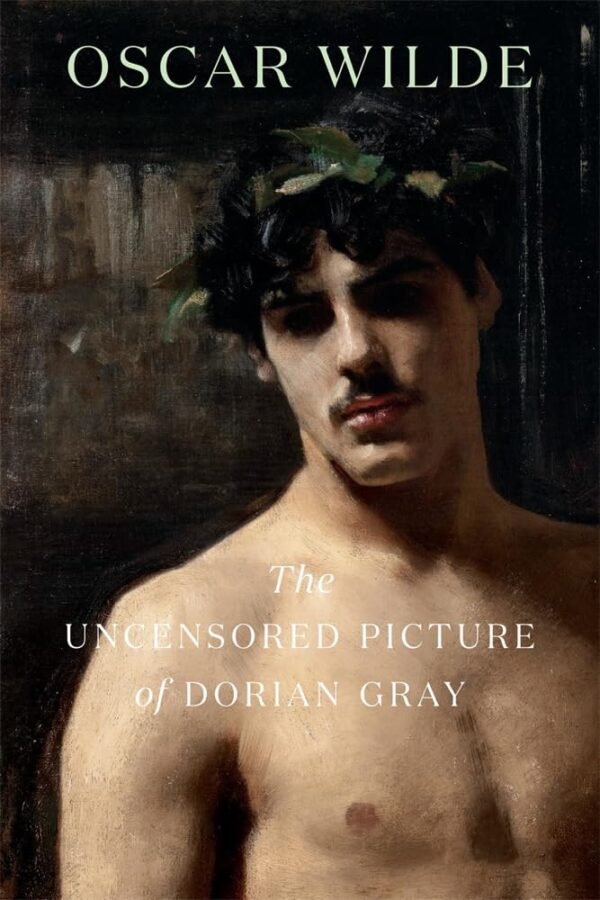
This study will use, as its basic text, The Uncensored Picture of Dorian Gray, published by the Harvard University Press (2012).
JOINING DETAILS:
- Four-meeting study, live on Zoom, led by Dr Nancy Goldstein
- Tuesdays, 8.00-10.00 (UK time), 14 July – 4 August
- HIGHLY recommended edition: The Uncensored Picture of Dorian Gray: A Reader’s Edition ISBN: 9780674066311
- £160.00 for four two-hour meetings